Ces microbes qui nous gouvernent
★ 10 · 2016 · Documentary
More Like This
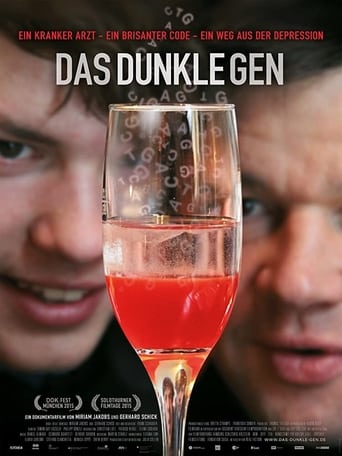
The Dark Gene
2015 · ★ 8
The film tells a very personal story from two perspectives: our protagonist is both doctor and patient. As a patient, he has struggled with recurring depression for years, and as a doctor he wants to find out why. The search for the origins of his illness leads him into the realm of his own genes and casts light on the fundamental changes facing modern society as a result of the tremendous progress being made in the field of genetic sequencing. Along the way, he meets a host of people – researchers, artists, visionaries – who have developed their own very individual approach to genetic coding and are drawing attention to the social significance of genetic technology. The film does not restrict itself to a scientific view of the subject but also makes use of artistic visions and more playful approaches to genetic blueprints.
More info →
Magic Myxies
1931
Short film showing (with limited accuracy) the life-cycle of myxomycetes.
More info →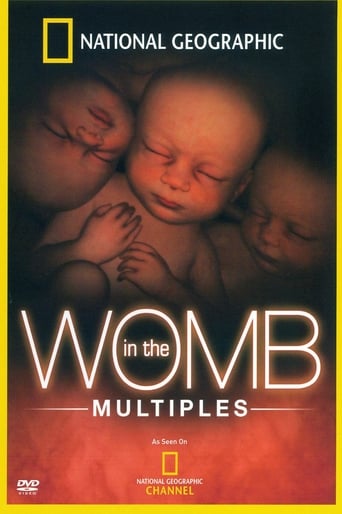
In the Womb: Multiples
2007
Advanced technology, groundbreaking scientific discoveries about the beginnings of life, and computer animation all combine to detail how multiple siblings develop in the womb as the filmmakers at National Geographic explore the fetal growth of twins, triplets, and quadruplets. Detailed pictures of these different groupings in various stages of fetal development bring the earliest stages of life to the screen as never before.
More info →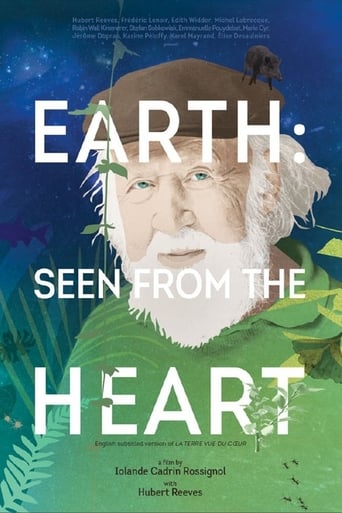
Earth: Seen From The Heart
2018 · ★ 6.6
For more than twenty years, Hubert Reeves has put science, his media influence, and his energy at the service of a cause: biodiversity.
More info →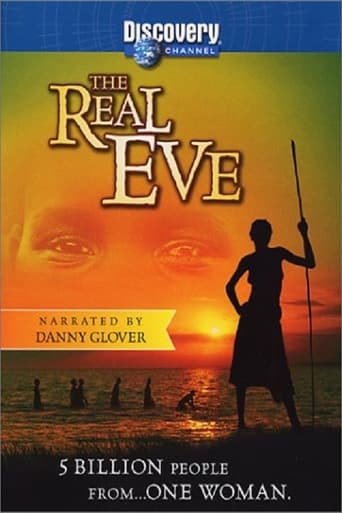
The Real Eve
2002 · ★ 9
The made-for-cable documentary film The Real Eve is predicated on the theory that the human race can be traced to a common ancestor. The mitochondrial DNA of one prehistoric woman, who lived in Africa, has according to this theory been passed down from generation to generation over a span of 150,000 years, supplying the "chemical energy" to all humankind.
More info →
A War on Science
2006 · ★ 8
When Charles Darwin published his theory of evolution nearly 150 years ago, he shattered the dominant belief of his day – that humans were the product of divine creation. Through his observations of nature, Darwin proposed the theory of evolution by natural selection. This caused uproar. After all, if the story of creation could be doubted, so too could the existence of the creator. Ever since its proposal, this cornerstone of biology has sustained wave after wave of attack. Now some scientists fear it is facing the most formidable challenge yet: a controversial new theory called intelligent design.
More info →
League of Denial: The NFL’s Concussion Crisis
2013 · ★ 7.5
Drawing on the book of the same name, League of Denial crafts a searing two-hour indictment of the National Football League’s decades-long concealment of the link between football related head injuries and brain disorders.
More info →
Thrive: What on Earth Will it Take?
2011 · ★ 5.9
An unconventional documentary that lifts the veil on what's really going on in our world by following the money upstream - uncovering the global consolidation of power in nearly every aspect of our lives. Weaving together breakthroughs in science, consciousness and activism, THRIVE offers real solutions, empowering us with unprecedented and bold strategies for reclaiming our lives and our future.
More info →
Humboldt in Mexico: The Gaze of the Explorer
2017 · ★ 6.3
The greatest explorer of the Americas, German scientist Alexander von Humboldt, narrates his voyage to New Spain in 1803 as he prepares his magnum opus Cosmos for publication from his library in Berlin. During his journey, he discovers Mexico’s extraordinary biodiversity; its mineral, volcanic, architectural, and pre-Hispanic richness; and its profound inequalities.
More info →
Voyage of Time: Life's Journey
2017 · ★ 6.3
A celebration of the universe, displaying the whole of time, from its start to its final collapse. This film examines all that occurred to prepare the world that stands before us now: science and spirit, birth and death, the grand cosmos and the minute life systems of our planet.
More info →
Size Matters
2018 · ★ 8
In a search for clues about size, the documentary shows why the sun and planets are so large, why insects have shrunk in the course of evolution and how tall trees can actually grow. Fantastic thought experiments are visualized: animals grow many times their normal size and a man is shrunk to the size of an insect. The results of the unnatural reversal of size ratios have incredible consequences. What are the advantages and disadvantages? "Size matters" is a scientific documentary narrated with fictional scenes. Parallel worlds are created in which size appears in a completely new light, often in a different way than previously known. Modern, astonishing CGI sequences support internationally recognized scientists on a journey to both ends of the size scale and help to understand the world in its dimensions.
More info →
The Beasts Within
2001 · ★ 9
A closer look at the science of Human evolution, and how much early humans might've contributed to the extinction of large mammals during the Ice Age.
More info →