La máscara de la conquista
★ 9 · 1986 · 85m · Documentary
The film tells two parallel stories. One, set in the present, tells of a pagent about the conquest of America, while the other, set in the 15th century, tells of a group of conquistadors coming ashore searching for gold. The film takes place in an unnamed country.
More Like This

Wolfram, Wolf's Saliva
2010 · ★ 7
The darkness of the mine, invaded by the miners' light, by the noisy machines and the permanent and intense smell of ore in the air, leads us to an environment in which time and space become confused. A documentary film at Panasqueiras' Mine, between 2008/09. A reality captured by an eye-observer which does not interfere, but follows the compost that grows from the earth and is decomposed by man-machine.
More info →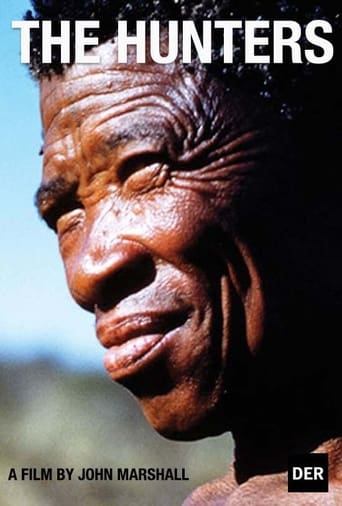
The Hunters
1957 · ★ 6.5
An ethnographic documentary following four Ju/’hoansi (!Kung) men during a multi-day giraffe hunt in the Kalahari Desert, filmed during the Smithsonian–Harvard Peabody expedition of 1952–53.
More info →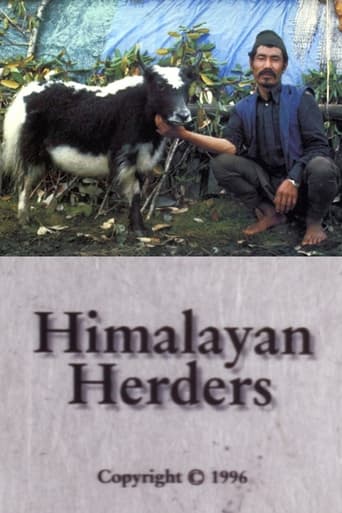
Himalayan Herders
1997
John Bishop and Naomi Bishop present a portrait a peculiar life style of the Himalayan indigenous Sherpa people in their documentary , the Himalayan Herders. The 76 minutes long film is about the diverse culture and life style of herders community near Mt. Everest region of Nepal.The film was made in 1997 as a part of Case Studies in Cultural Anthropology Series.
More info →Kwaheri: Vanishing Africa
1964 · ★ 5.5
Early Mondo film featuring primitive rituals, animals being butchered, unusual birth defects, and a legit trepanation scene.
More info →
Japan in Feast
1918 · ★ 6.5
An actuality film showing a Buddhist festival in Kyoto. The procession includes Buddhist monks, geishas, and others dressed coordinately to the Japanese tradition.
More info →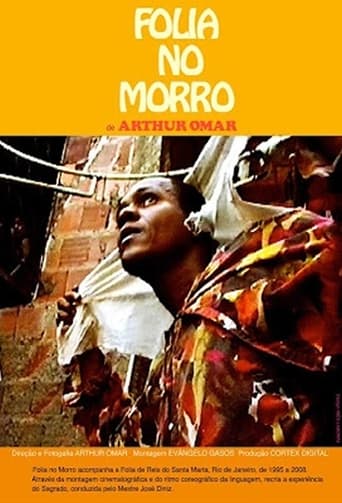
Folia no Morro
2008
An ethnographic documentary following the Folia de Reis party that is celebrated every year at Morro de Santa Marta on Rio de Janeiro.
More info →
Congo
1972 · ★ 5.8
An experimental ethnographic documentary that criticizes the colonizer view of anthropology.
More info →Choqela: Only Interpretation
1987
This provocative and profound film documents the Choqela ceremony, an agricultural ritual and song of the Aymara Indians of Peru. By offering several different translations of the proceedings, the film acknowledges the problems of interpretation as an inherent dilemma of anthropology.
More info →
Smoke and Rubber: Inside Modified Car Culture
2025
Speed, emotion, dream. Smoke and Rubber follows the drivers of Istanbul who dedicate it all to modified car culture. Beyond the noise, it traces how speed, sound, and the performance of masculinity define a way of living, from the garage to the streets. Based on ongoing research, this is a reflective portrait of a noisy world.
More info →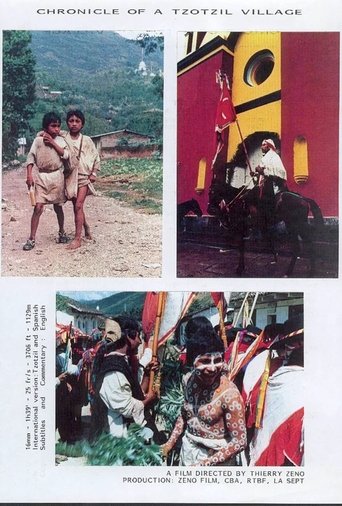
Chroniques d'un village tzotzil
1992
A documentary about the daily life of a native Tzotzil community in southern Mexico, shot over a period of eight years.
More info →
Machete Gillette... Mama
1989 · ★ 6
"With characteristic wit and rigor, experimental filmmaker Larry Gottheim here applies his impressionistic editing style to footage collected during his travels in the Dominican Republic. Gottheim’s formal emphasis on repetition and fissures between sound and image resonates here as a mode of sociological reflection (with the fragmentary montage mirroring elements of ritual while also destabilizing the ethnographic gaze). A largely overlooked antecedent to the contemporary blending of avant-garde and ethnographic filmmaking, MACHETTE GILLETTE… MAMA still poses a potent challenge to documentary convention." - Max Goldberg
More info →