You Have Struck a Rock!
★ 9 · 1981 · 28m · Documentary
You Have Struck A Rock! commemorates the special contribution of South African women to the success of the anti-apartheid struggle. It recovers the remarkable "women's campaigns" of the 1950s against the hated pass system. This massive, non-violent civil disobedience movement was only finally crushed by the 1960 Sharpeville Massacre and the banning of anti-apartheid organizations. Lilian Ngoyi, Helen Joseph, Dora Tamana and other leaders recall this struggle and their imprisonment and banning. Yet they remain undaunted, demonstrating the South African proverb: "When you have touched a woman, you have struck a rock."
More Like This

Is Love Racist? The Dating Game
2017
Emma Dabiri looks at racism in Britain via the world of modern dating, love apps, and a national survey suggesting that young Britons could be more segregated than ever.
More info →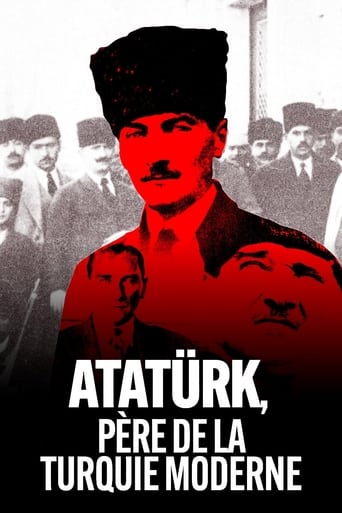
Atatürk, Father of Modern Turkey
2023 · ★ 8
Mustafa Kemal Atatürk (1881-1938) was a Turkish field marshal, revolutionary statesman, author, and the founding father of the Republic of Turkey, serving as its first president from 1923 until his death in 1938.
More info →Forest of Crocodiles
2009
How do white South Africans deal with their fears of crime and violence? Like crocodiles, some survive without evolving, living with their fears. Others make fear their friend and evolve in ways you'd never imagine.
More info →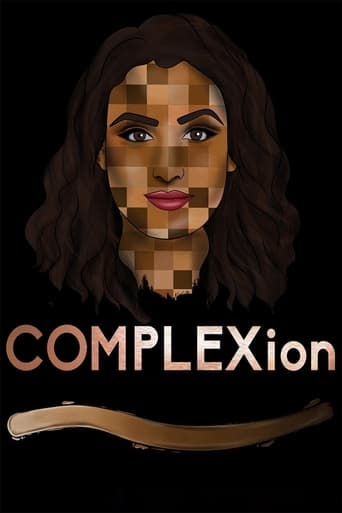
COMPLEXion
2023
"COMPLEXion is a documentary that aims to unpack the hegemony of skin color globally and challenge the archaic notions that exist surrounding it. Our mission is to defy toxic beauty standards through raw human stories."
More info →Menino Joel
2012
Documentary about Joel da Conceição Castro, a ten years old boy killed by a police bullet in 2010.
More info →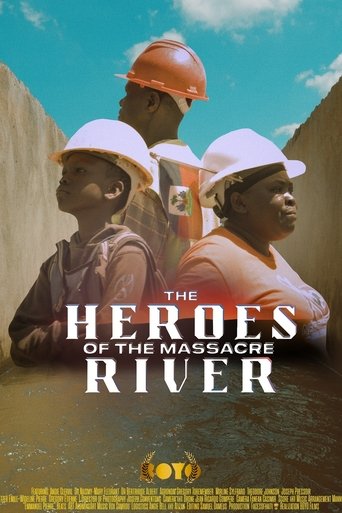
The Heroes of the Massacre River
2025
The Heroes of the Massacre River is a powerful documentary that chronicles the stories of the pioneers behind the construction of the historic Canal of Ouanaminthe, a project that united Haitians across the nation and the diaspora. This film celebrates the groundbreaking efforts of key figures, centering on Dr. Bertrhude Albert, Dr. Naismy-Mary Fleurant, architect Wideline Pierre, economist Etzer Emile as well as dedicated canal workers Milourie Sylfrard, Theodore Johnson and Joseph Pressoir — all guided by the investigative journey of Max Angie Clervil. It also serves as a commentary on the complexity of colonialism and borders, tracing the role that the Massacre River continues to play in the history of Ayiti.
More info →
Images of the Orient - "Vandalic Tourism"
2001 · ★ 5
Working from archives of private film footage from a trip to India by the upper class of the late 1920s, a period of strong anti-colonial outbreak, Yervant Gianikian and Angela Ricci Lucchi deconstruct the images and analyze the attitude and behavior of Westerners in the East.
More info →Raising Renee
2011
RAISING RENEE is the story of a family's remarkable response to being broken apart and rearranged after nearly 50 years. The film explores deep themes of family, race, class and disability through the interplay of painting, cinema and everyday life. Produced and directed by Oscar nominees Jeanne Jordan and Steven Ascher, RAISING RENEE is the third part of a trilogy about resilient families that includes their acclaimed feature documentaries So Much So Fast and Sundance Grand Jury Prize winner Troublesome Creek. RAISING RENEE is about a unique group of women, the tenacity of family bonds and the power of art to transform experience into something beyond words.
More info →The Female Lead - A Selection of Portraits
2017 · ★ 1
The interviews show these extraordinary women sharing their diverse journeys, personal stories, and perspectives, and the effect is both inspiring and empowering. The Female Lead is an initiative founded by data pioneer and entrepreneur Edwina Dunn to make women’s stories more visible, offering alternative role models with the goal of fostering ambition and self-belief in young women.
More info →
Grandmother of Russian Feminism
2007 · ★ 4.5
Portrait of a typical European feminist - Olga Lipovskaya (1954-2021), journalist, translator, poet, founder of the women's non-profit organization St. Petersburg Center for Gender Issues (an educational and resource center for women and women's organizations), editor of the samizdat magazine Women's Reading.
More info →