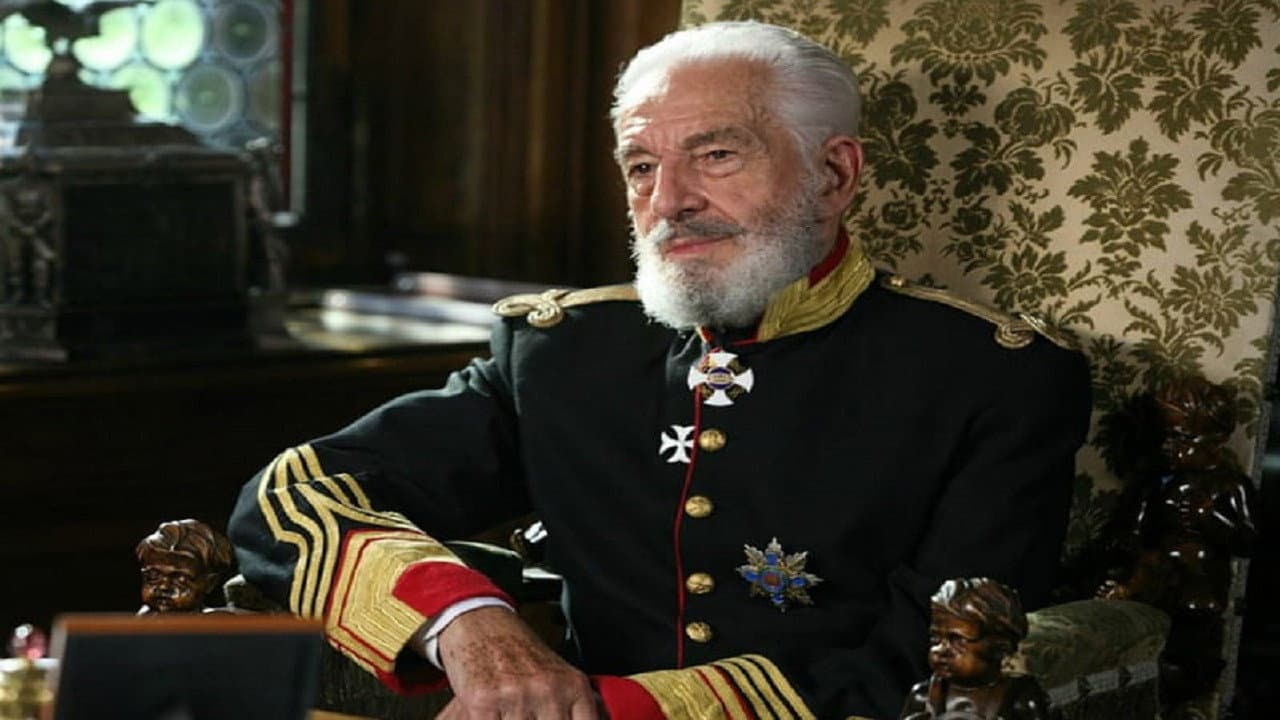
Carol I
★ 8.2 · 2009 · 90m · History · Documentary
The last days of the first Romanian king, Carol I of Hohenzollern-Sigmaringen, and the tough decisions he had to make in the summer of 1914 in order to please both Romanian Parliament and his relatives from the German Empire.
More Like This

We Feed the World
2005 · ★ 7.4
A documentary that exposes the shocking truths behind industrial food production and food wastage, focusing on fishing, livestock and crop farming. A must-see for anyone interested in the true cost of the food on their plate.
More info →
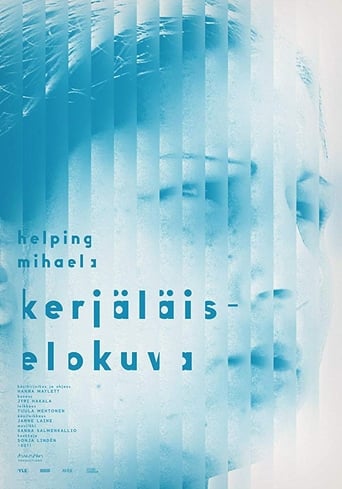
Helping Mihaela
2011 · ★ 6
A Roma beggar on his knees raises many extreme emotions: guilt, rage, sympathy and frustration. Most people just walk on by, but there is always someone willing to help. In this film, the director follows the confrontations between the Roma beggars from Romania and Finnish people, and is forced to question, over and over again, her own ideas about helping.
More info →
Derby c.1938 - Eisner Personal Film
1938
Charming amateur film featuring the Eisner family, who emigrated to Britain from Romania the year this film was made.
More info →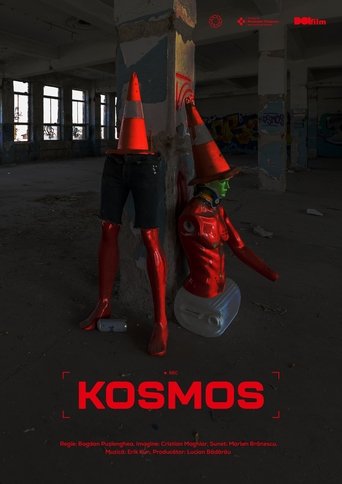
Kosmos
2025
A documentary about the Kosmos collective in Timisoara: a self-organized group of artists, curators, and musicians who revived a former textile factory.
More info →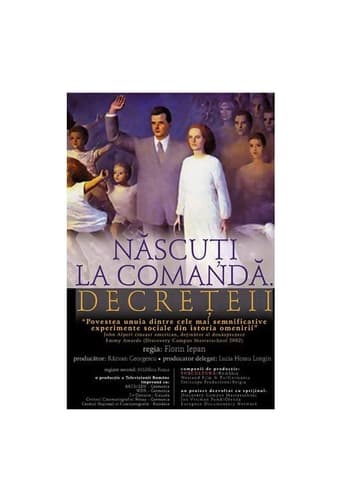
Children of the Decree
2005 · ★ 8
Procreation is the social duty of all fertile women, was the political thinking during the 1960s and 1970s in Romania. In 1966, Ceaucescu issued Decree 770, in which he forbade abortion for all women unless they were over forty or were already taking care of four children. All forms of contraception were totally banned. The New Romanian Man was born. By 1969, the country had a million babies more than the previous average. Romanian society was rapidly changing. By using very interesting archival footage and excerpts from old fiction films and by interviewing famous personalities from that time – gynecologists or mothers who were part of the new society - the director revives this period of tremendous oppression of personal freedom. Many deaths were caused by the mere fact that women, including wives of secret Romanian agents, famous TV presenters, and actresses, had to undergo illegal abortions. Many women were jailed for having them.
More info →Road of Love
The true story of Traian Popovici, a Romanian Mayor that saved 20,000 Jewish People from death during WWII and his friend, who married a Jewish woman against Hitler's orders.
More info →The Source - One Day in a Roma Settlement in Romania
2009 · ★ 6
The film starts with a long, static shot of the sun rising above the hills near the Roma village of Hetea in Romania. We only hear the sounds of birds, including a cuckoo. In the distance, a satellite dish figures on a roof. Slowly, the daily routine begins. We see more and more activity, like the harnessing of a horse to a cart, loading stripped tree trunks, collecting water from a pipe, playing soccer and a girl getting punished with a severe slap on her arm. These scenes are mostly captured from a distance. Then, towards noon, the fat is in the fire. The camera looks for the villagers who argue with each other and registers how an old man paces up and down the street. Because the images have not been subtitled (intentionally), the meaning of the quarrel remains unclear. The film does not mention any names or other facts, either. The absence of this context makes this documentary into a picturesque impression.
More info →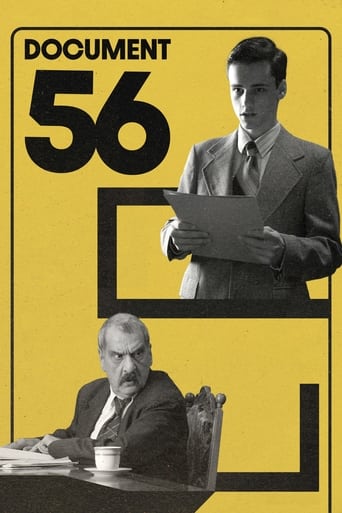
Document 56
2024
In Cold War-era Romania, two Securitate officers intercept a letter from Richard Nixon to Nicolae Ceausescu. With 48 hours to prepare for the arrival of CIA operatives, the two agents race to determine the hidden agenda of the visit.
More info →
The Forest
2014
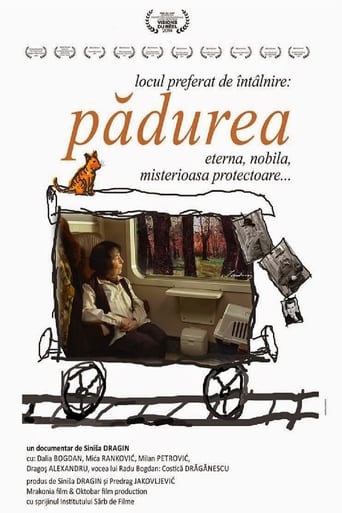
In 1947, Yugoslav President Josip Broz Tito visited, for the first time, Romania. Its communist regime gave him, as present, a painting from a great Romanian artist Ion Andeescu: 'The Leafless Forest'. In the 60s, a young art critic, Radu Bogdan, decided to elaborate a monograph dedicated to the great painter, including reproduction of the painting given to Tito. After countless problems, he obtained the permission to photograph the painting. The moment they took the painting off the wall, they found - a microphone. Somebody was spying on Tito...
More info →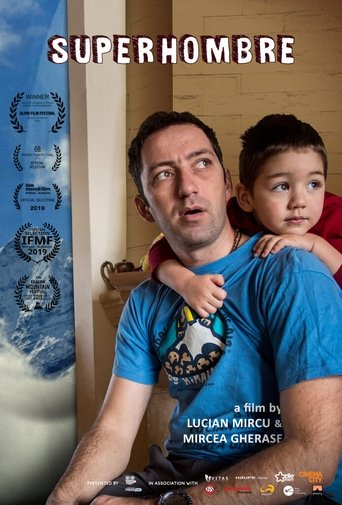
Superhombre
2019 · ★ 8
Horia Colibasanu is a dentist, father of two boys and elite climber. In 2008, he refused to abandon, at 7400 meters on the Annapurna, his sick companion, the Basque mountaineer Iñaki Ochoa de Olza, implanted his own life in danger. His action dazzled the climbing community. Despite this tragic incident, he continued to climb in pure alpine style, without supplemental oxygen. In 2017, the 40-year-old Romanian athlete will return to Everest, after two unsuccessful attempts. For the first time, Horia is attempting a solo ascent.
More info →