Endless Day
1971 · 30m
Among Tooming's filmic works, Endless Day provides perhaps the most eloquent material for investigating the radical renewal of visual and narrative form, as well as the shifting registers of spatio-social portrayals and critiques in Estonian cinema. It was banned in 1971 and ordered to be destroyed. However, the film was retained and restored in the 1990s.
More Like This
Berlin: Symphony of a Great City
1927 · ★ 7.5
A day in the city of Berlin, which experienced an industrial boom in the 1920s, and still provides an insight into the living and working conditions at that time. Germany had just recovered a little from the worst consequences of the First World War, the great economic crisis was still a few years away and Hitler was not yet an issue at the time.
More info →
Thread of Voice
1993 · ★ 8
Arf Arf is a sound poetry (voice and gesticulation) group. They describe their first film together as 'songs nailed together in a film'. The film is not given over to simply recording a performance of sound poetry but is worked out as a filmic combination of images and sound, each member of the group having individually previously made experimental films.
More info →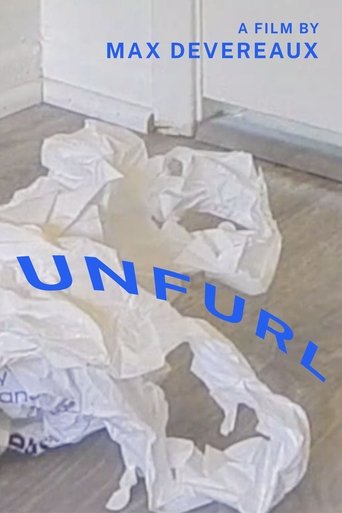
Unfurl
2023
Unfurl is a minimalist short film composed of six contemplative shots featuring different colored plastic bags placed before a dual-camera setup, presented in split-screen from two contrasting angles. Each sequence begins with Devereaux's hand compressing a bag, then releasing it — allowing the material to slowly expand. The initial release is rapid, but the motion soon settles into a meditative, near-slow-motion unfurling, drawing attention to the subtle behavior of shape, light, and texture. Inspired by a live performance Devereaux witnessed of avant-garde composer Takehisa Kosugi — specifically his act of wrapping a microphone in paper during a performance at the Getty Center's Rajikaru! conference — the film channels a similar spirit of experimental material interaction, silence, and focused perception. Unfurl invites viewers to observe slowness and transformation as a form of quiet performance.
More info →
Closed Vagina
1963 · ★ 8.8
Adachi's follow-up to Bowl using the figure of a woman suffering from an unusual sexual aliment has often been taken as a controversial allegory for the political stalemate of the Leftist student movement after their impressive wave of massive fiery protests failed to defeat the neo-imperialist Japan-US Security Treaty. The ritualistic solemnity of the charged sexual scenes contribute to the oneiric qualities of Closed Vagina which Adachi would later insist was an open work, not meant to deliver any kind of deliberate political message. - Harvard Film Archive
More info →
Popsong
2016
The world appears black on black until it separates from itself, looks at itself, includes itself, and sees colour.
More info →
The Making of Michel Petite
2025
The film begins as a documentary about an author known for autofiction. By incorporating multiple making-of layers, it blends the process of making the documentary with the author’s narrative technique.
More info →
Portrait of a Motherless Child
2025
The subject grapples with the losses and changes in their life as they're forced by flickering lights to reconcile with their past.
More info →
PROTOTYPE
2017 · ★ 3
As a major storm strikes Texas in 1900, a mysterious televisual device is built and tested. Blake Williams’ experimental 3D sci-fi film immerses us in the aftermath of the Galveston disaster to fashion a haunting treatise on technology, cinema, and the medium’s future.
More info →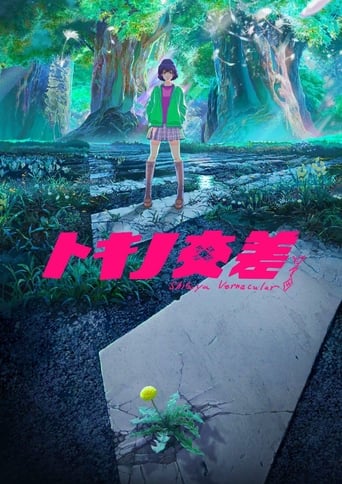
Shibuya Vernacular
2018 · ★ 4
A four-dimensional short anime will start at the very beginning of Shibuya Crossing, that is, 10,000 years in the past. The anime is part of a collaborative project helmed by Yoshitoshi Shinomiya. It features a hybrid of animation and live-action. The short was screened on Shibuya's Crossing screens and a YouTube-friendly version was posted as well. (Source: ANN)
More info →
Digital Smoke
2025
Digital Smoke is an experimental meditation on light, memory, and distortion. Shot at twilight in Minneapolis’s Loring Park, the film captures the moment just after sunset, when street lamps flicker on and reflect across the lake. As Devereaux moves the camera backward and forward, fading light introduces digital noise. Rather than correct it, he amplifies the imperfection, layering light trails until the noise becomes ethereal white clouds—“digital smoke”—that dissolve the boundary between image and abstraction. Frames evoke the hazy textures of J.M.W. Turner and the pixelated aesthetic of early video games, blending painterly romanticism with digital fragmentation.
More info →
Cotton Candy
2002 · ★ 8
Gehr uses a mini-digital recorder to look back on the Machine Age in the form of San Francisco's soon-to-be-shuttered Musee Mecanique. For slightly more than an hour, Cotton Candy documents this venerable collection of coin-operated mechanical toys—including an entire circus—mainly in close-up, isolating particular details as he alternates between ambient and post-dubbed (or no) sound. By treating the Musee's cast of synchronized figures as puppets, the artist is making a show—but is it his or theirs? Gehr's selective take on the arcade renders it all the more spooky. There's a sense in which Cotton Candy is a gloss on the moment in The Rules of the Game when the music-box-collecting viscount unveils his latest and most elaborate acquisition. (It also brings to mind the climax of A.I.: The DV of the future tenderly regards the more human machine of the past.) (J. Hoberman, The Village Voice)
More info →