We Are the Guinea Pigs
★ 6 · 1980 · 90m · Documentary
Farmers and parents of young children, who live in the Harrisburg, Pa., area, discuss their fears of radioactive contamination from the Three Mile Island nuclear reactor accident in 1979. Scientists and physicians also expound on the lethal dangers of nuclear power and the risks in containment processes.
More Like This

The Fight Has Just Begun - A Mises Caucus Documentary
2021
"The Fight Has Just Begun" is a Mises Caucus production about the events surrounding the 2021 LPPA Convention where 140 members of the state party, most of whom were Mises members, were stopped from voting in their own state party convention for the first time in the history of the state party. The next LPPA Convention is taking place March 4-6 2022 in Williamsport, PA. #TakeHumanaction with us by joining the LPPA at lppa.org/join Sign up to the Mises Caucus at TakeHumanAction.com Sign up by September 5th. Get involved with the PA Mises Caucus: https://www.cognitoforms.com/Mises1/StepsForLPPAConvention
More info →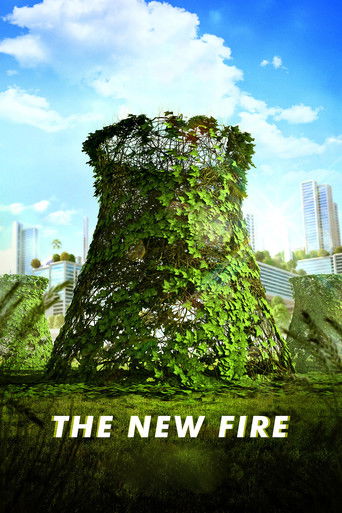
The New Fire
2017
As the effects of climate change become more and more apparent, a new generation of nuclear engineers is on the rise, hoping to help solve this greatest environmental challenge humanity has ever faced. THE NEW FIRE is a documentary by Emmy-winning director David Schumacher, which provides a timely perspective on addressing climate change and global development. Nuclear energy has been vilified in much of the environmental community, yet the next-generation reactors currently in development may actually be the key to avoiding climate catastrophe
More info →
I'm So Sorry
2021 · ★ 8
In a quiet forest, a sign warns of radiation hazard. “Is this the past or the future?” muses the masked figure who appears like a kind of ghost in nuclear disaster areas. At a time when nuclear power may be re-emerging as an alternative to fossil fuels, this calmly observed and compelling tour takes us to places that may serve as a warning.
More info →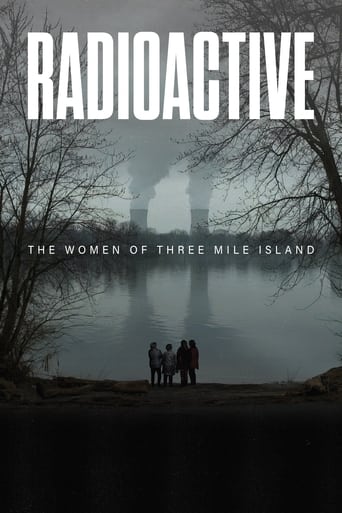
Radioactive: The Women of Three Mile Island
2024 · ★ 6.3
In this thrilling documentary, indomitable women fight back against the nuclear industry to expose one of the biggest cover-ups in US history: the 1979 Three Mile Island meltdown and its aftermath. The film reveals the never-before-told stories of four intrepid homemakers who take their case all the way to the Supreme Court, and a young female journalist who's caught in the radioactive crossfire.
More info →Th (Part 11: Dr. Helen Caldicott)
2014 · ★ 5.1
Dr. Helen Caldicott is the most prominent anti-nuclear activist in the world. She's been featured on CNN, 60 Minutes, CBC and Democracy Now. In the 80s, Helen Caldicott campaigned against nuclear weapons testing in the pacific (still responsible today for the majority of tritium we're exposed to), and against the notion of a winnable nuclear war. She was nominated for a Nobel Peace Prize for her efforts. She has always made inaccurate statements regarding civilian nuclear power. But, since the Fukushima-Diachii radiation release has caused (and is projected to cause) zero fatalities... http://www.unis.unvienna.org/unis/en/... ...her tone has changed when speaking to supporters. This has not been acknowledged by prime-time media, as they continue to use her as a source. Any person or media outlet should check Caldicott's history of statements (on any subject) against a domain expert before using her as a source.
More info →Pennsylvania: A Keystone for Wildlife
2024
Pennsylvania encompasses some of the most diverse habitat types in the country due to varying geography: from the ridge and valley mountains cutting diagonally across the state, to upper Piedmont, wetlands, grassland, riparian areas, and even beaches in the Northwest. The variety here is remarkable and as a result, our state is diverse with wildlife. Habitats here are significant to many wildlife species. Come along on a brief journey that touches on Pennsylvania conservation history, and the many species we are working with today. A healthy habitat is a diverse habitat, and we hope to leave a natural legacy that will endure for generations to come.
More info →Douglas Point Nuclear Power Station
1968
The success of this first full-scale nuclear power station on the shores of Lake Huron has shown the way for the economic large-scale production of electricity from uranium. This film describes the plant at Douglas Point, Ontario, and the process by which the uranium atom is split, employing heavy water with a special property, deuterium, giving the name CANDU (Canada Deuterium Uranium) to the Canadian system of atomic energy production. Produced for the NFB by Crawley Films Ltd. for Atomic Energy of Canada Limited.
More info →Nuclear Power Reactor - Pickering
1973
East of Toronto on the shore of Lake Ontario, is the Pickering Generating Station, one of the world's largest nuclear power stations. Here it is used to explain how a nuclear power station works, showing the fuel bundles, calandria, fuelling machines, boilers, control room, turbine-generator and spent fuel bay. Part of the multimedia kit The Energy Crisis?. Produced by the NFB for Energy, Mines and Resources Canada.
More info →On the Critical Path
1971 · ★ 7
Nuclear power plants are not exactly sold on the same scale as wheat, but that they can be manufactured as an exportable commodity is well illustrated in this film. For those familiar with nuclear power generation, and even for the lay audience, this is a lucid exposition of how a nuclear power plant is put together. The film shows the machining and assembly of principal components, and the "on power" operation of the Canadian plant at Pickering, Ontario. Produced by the NFB for Atomic Energy of Canada Limited.
More info →Power from the Atom
1975
Filmed at the Pickering, Ontario, nuclear power plant, showing also the earlier Douglas Point station and Québec's new Gentilly plant, this film offers audiences a clear illustration of how an atomic reactor produces electricity. Special features of the Canadian (CANDU) (Canada Deuterium Uranium) system are explained: on-power refueling; the use of natural uranium; the use of heavy water as moderator. CANDU is recognized internationally as a leader in man's search for new sources of energy. Produced for the NFB by Crawley Films Ltd. for Atomic Energy of Canada Limited.
More info →The Power of Matter
1960 · ★ 7
A two-part study of nuclear power with Larry Henderson, skilled observer, analyst and commentator on public affairs as guide. Part 1 shows civilian applications outside Canada. Part 2 shows the history of atomic energy development in Canada, from the outset of World War II to the installations at Chalk River.
More info →The Atom - Servant of Man
1959 · ★ 8
The focus of this film is on Canada's nuclear research centre at Chalk River, Ontario. Key to atomic progress are the radioactive isotopes. The insertion and handling of these isotopes in the deadly interior of the reactor are shown in detail. Also shown are the applications of radioactive isotopes in various fields of endeavor, particularly medicine, agriculture, and manufacturing industries. Co-produced by the NFB and Crawley Films Ltd. with the assistance of Atomic Energy of Canada Limited.
More info →