Impaler
★ 7.8 · 2007 · 84m · Documentary
Jonathon "The Impaler" Sharkey threw himself into the race for Minnesota governor on January 13, 2006. His "coming out" to the media as a Hecate Witch, Satanic Dark Priest and Sanguinary Vampire grabbed international attention, and his candidacy marked the beginning of the largest amount of media coverage ever given to an unknown third party candidate running for governor in American history.
More Like This

What I Learned About US Foreign Policy
2003 · ★ 10
A video compilation that reveals the true nature of U.S. foreign policy.
More info →
Everyday Life
1976 · ★ 5.2
Dialogue-free short detailing the daily tasks of a man and his wife.
More info →
Reiwa Uprising
2019
Kazuo Hara follows Ayumi Yasutomi, a transgender candidate, who is also a Tokyo University professor, as she embarks on a national campaign for a seat in Japan's Upper House.
More info →
Untitled #29.95
1999
Originally produced anonymously and distributed by RTMark, Untitled #29.95 tells the story of the commercial art establishment's attempt to turn video art into a precious commodified object through the release of limited editions during the nineties.
More info →
Rumstick Road
2014
A video reconstruction of the 1977 Wooster Group production Rumstick Road, an experimental theater performance created by Spalding Gray and Elizabeth LeCompte after the suicide of Gray's mother. Archival recordings are combined with photographs, slides, and other materials to recreate the original production.
More info →Kiss 25 Goodbye
1991
Outrage kiss-in at Bow Street police station in London, with a demonstration against homophobic government bills clause 25/28.
More info →
The Five Obstructions
2003 · ★ 6.9
In 1967, experimental filmmaker Jorgen Leth created a striking short film, The Perfect Human, starring a man and women sitting in a box while a narrator poses questions about their relationship and humanity. Years later, Danish director Lars von Trier made a deal with Leth to remake his film five times, each under a different set of circumstances and with von Trier's strictly prescribed rules. As Leth completes each challenge, von Trier creates increasingly further elaborate stipulations.
More info →
The 50 Year Argument
2014 · ★ 6.6
Follows the waves of literary, political, and cultural history as charted by the The New York Review of Books, America’s leading journal of ideas for over 50 years. Provocative, idiosyncratic and incendiary, the film weaves rarely seen archival material, contributor interviews, excerpts from writings by such icons as James Baldwin, Gore Vidal, and Joan Didion along with original verité footage filmed in the Review’s West Village offices.
More info →
Leninland
2013 · ★ 1
At the peak of Perestroika, in 1987, in the village of Gorki, where Lenin spent his last years, after a long construction, the last and most grandiose museum of the Leader was opened. Soon after the opening, the ideology changed, and the flow of pilgrims gradually dried up. Despite this, the museum still works and the management is looking for ways to attract visitors. Faithful to the Lenin keepers of the museum as they can resist the onset of commercialization. The film tells about the modern life of this amazing museum-reserve and its employees.
More info →Ruy Mauro Marini and the Dependancy Dialetics
Ruy Mauro Marini was a brazilian sociologist who developed the Marxist Dependancy Theory, to explain the development of latin american nations due their place in the global capitalism. This film, through multiple interviews, gives a short overview of his life and work.
More info →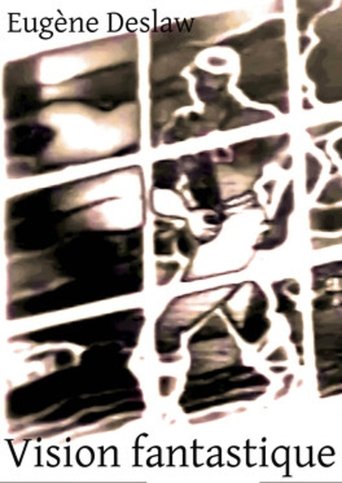
Fantastic Vision
1957 · ★ 5.2
Footage filmed in Spain, subjected a new visual effects process. Deslaw devoted himself to the discovery of a new machine that enabled film to be developed while using a new method called solarisation.
More info →
The Changing Face Of Salford Collection
1970
Between 1968 and 1970, J M Goodger, a lecturer at the University of Salford, made a film record of the living conditions in the slums of Ordsall, Salford, which were then in the process of being demolished. Under the title 'The Changing face of Salford', the film was in two parts: 'Life in the slums' and 'Bloody slums'.
More info →