Land of My Father
2020 · 76m · Documentary
Byeong-man, a farmer whose father was enslaved during Japan's occupation of Korea, protests the Japanese government's claim over the disputed island territory of Dokdo. Kyeong Sook, a woman who lived on Dokdo with her father, struggles to keep his legacy alive after the Korean government mysteriously erased their history. Set in the unresolved trauma of the Japanese occupation of Korea, Land of My Father (아버지의 땅) is a story about two lives that are intertwined with a remote disputed island.
More Like This
The Cross of North Gando
2019
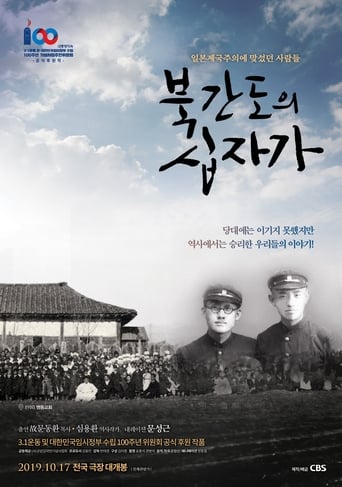
The Christians of North Gando lose their country and leave their hometown, but gain the Gospel. The cross they hold in their hands is the symbol of daring for independence and a royal summon of the generation they have to endure. Historian Sim Yo Han retraces the footsteps of the late Father Moon Dong Hwan and finds meanings of the anti-Japanese independence movement hidden in various parts of North Gando.
More info →
The Origin of Miracles
2023
A documentary film covering the life of President Syngman Rhee and the contributions he made to the Republic of Korea, spanning his childhood, focusing on his independence movement, the founding of the nation, the process of leading to victory in the Korean War, and the process of laying the foundation for Korea's industrialization.
More info →
Comfort
2022
KIM Soonak is a survivor of sex slavery by the Japanese military. The war may have ended, but her life was still at a war. She lived in the prostitute quarters to survive, did sex business in the US military camp town, and peddled goods from the US military. She raised two kids on her own as she worked as a maid. We’ll listen to her story in her absence. The film reconstructs the life story of the deceased KIM Soonak with interviews with activists, archive videos, animation, and read-aloud testimony.
More info →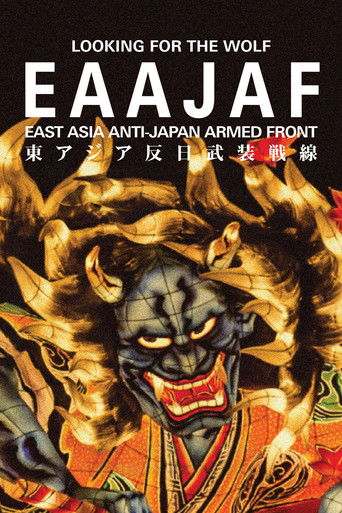
Looking for the Wolf: East Asia Anti-Japan Armed Front
2020 · ★ 3
On August 30th, 1974,a time bomb set by the "Wolf" brigade of the East Asia Anti-Japan Armed Front destroyed the Tokyo Headquarters of Mitsubishi Heavy Industries. "Fangs of the Earth" and "Scorpion" soon followed with more bombings. Unlike other leftist groups at the time that sought to seize the Japanese state to build socialism, the EAAJAF were explicitly opposed to the Japanese nation-state, understanding it as an imperialist power in East Asia and a junior partner to American imperialism. Over 50 years have passed since the Mitsubishi bombing; some EAAJAF members have passed, others are still incarcerated, and some have been recently released. In the intervening years, a group of friends and family members stepped forward to support their incarcerated loved ones, answering questions about how to provide long-term prisoner support for people incarcerated by the state and condemned by society.
More info →
Things That Do Us Part
2019
Things That Do Us Part is a documentary that reframes the stories of three women fighters who dove into a tragic war in modern Korean history, using witness statements and reenactments.
More info →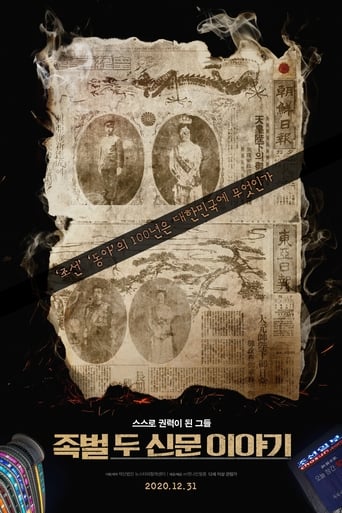
Media Mafia: a Tale of Two Newspapers
2021 · ★ 5.5
The 100 years of history of the Chosun Ilbo and the Dong-A Ilbo show that wrong press can be a social weapon.
More info →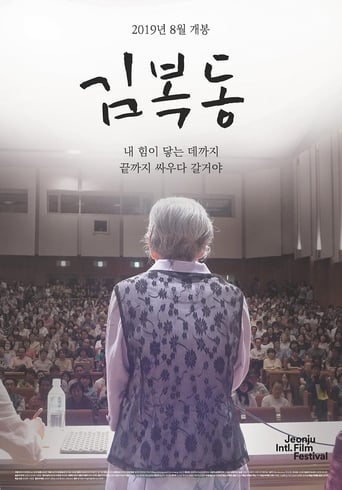
My name is KIM Bok-dong
2019 · ★ 8.8
In 1992, KIM Bok-dong, reported herself as a victim of the sexual slavery, "comfort women" during World War Ⅱ. She wanted to receive the proper apology from the Japan government but they denied its responsibility. In 2011, commemorating the 1000th Wednesday demonstration, Statue of Peace was installed in front of the Embassy of Japan. The fight over Japan confronts a new stage.
More info →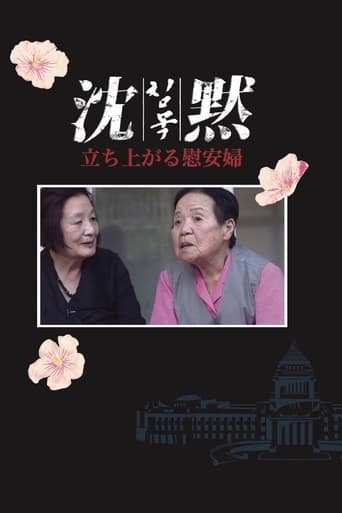
The Silence
2017 · ★ 10
The Silence narrates the struggle of fifteen "comfort women"—former sex slaves by the Imperial Japanese Army during WWII—for recognition and reparation. The "comfort women" issue has previously been treated almost exclusively within the framework of Korean nationalism. The Silence will provide insight into the ways in which nationalism and the emergence of post-war Asian nation-states have hindered the understanding of "comfort women" narratives through Zainichi Korean documentary filmmaker Soo-nam Park's point of view.
More info →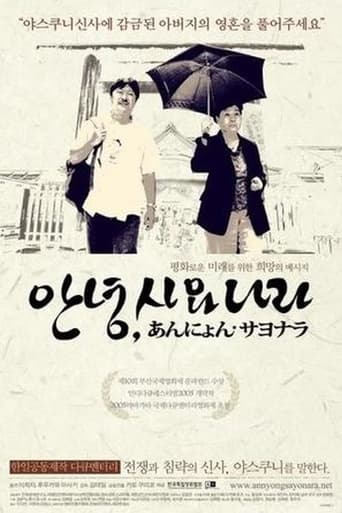
Annyeong, Sayonara
2005
This joint Korean-Japanese production follows a Korean woman, Lee Ha-jong, as she searches for her father's remains. He - like tens of thousands of other Koreans - was forced into the Japanese military, and subsequently killed during WW2. She is joined by a Japanese man, seeking reconciliation between his country's military past, and the countries victimized by that history. The filmmakers portray both sides of a still highly emotional debate that centers around the enshrinement of soldiers at the Yasukuni Shrine, and Lee's lawsuit to prevent her father from being enshrined there. As Lee visits Japan and the controversial Yasukuni Shrine, she confronts - and is confronted by a wall of nationalistic pride that might be compared to neo-Nazis defending the righteousness of The Reich. This is contrasted with her meeting and working with Japanese peace activists, who deplore their countries' militaristic past, and seek to heal the wounds with her neighbors.
More info →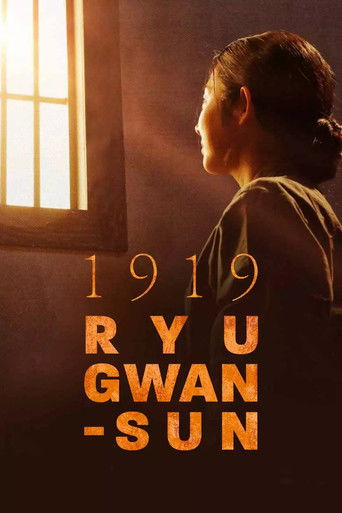
1919 Ryu Gwan-sun
2019 · ★ 10
In 1919, Ryu Gwan-sun was imprisoned at the Seodaemun Prison, charged with leading the independence protest at her hometown. In her cell, No. 8, many women were locked up after participating in the protest. They are different in ages, jobs, religions, and so on, but they all raise their voices for the nation's independence from Japanese Imperialism. The docudrama will highlight some of the female activists who devoted their lives to the Independence movement.
More info →