Khartoum 1960
1960 · 24m · Documentary
Although perhaps without foresight, Gubara seemingly set out to capture a historic picture of a city that today has completely vanished. He reveals to us the livelier place that Khartoum was before fateful circumstances turned it into a tough, surviving shell of its former self.
More Like This
The Chillouks, a Central African Tribe
1910 · ★ 7
Short documentary on a central african tribe called 'The Chillouks'.
More info →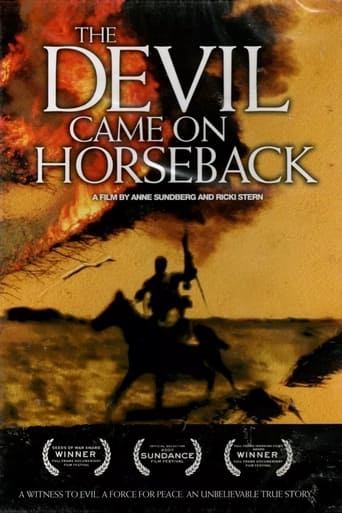
The Devil Came on Horseback
2007 · ★ 7.2
While serving with the African Union, former Marine Capt. Brian Steidle documents the brutal ethnic cleansing occuring in Darfur. Determined that the Western public should know about the atrocities he is witnessing, Steidle contacts New York Times reporter Nicholas Kristof, who publishes some of Steidle's photographic evidence.
More info →
Darfur Now
2007 · ★ 6.1
This acclaimed documentary follows the story of six people who are determined to end the sufferings in Sudan's war-ravaged Darfur. The six - an American activist, an international prosecutor, a Sudanese rebel, a sheikh, a leader of the World Food Program and an internationally known actor - demonstrate the power of how one individual can create extraordinary changes.
More info →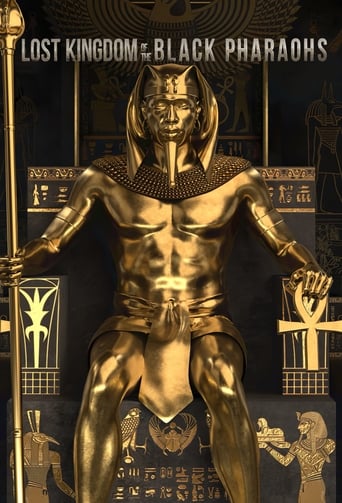
Lost Kingdom of the Black Pharaohs
2019 · ★ 8.4
The Kush Empire was an ancient superpower that dominated the Nile Valley and rivaled the Egyptians, and now, a new, cutting-edge investigation at a mysterious tomb could reveal the secrets of this formidable lost kingdom.
More info →
Don't Cry for Me Sudan: Shukran Baba
2020
Tonj, Sudan is the land with only desperation from poverty and war. This is the story about priest also doctor, educator, musician and architect Lee Tae-seok’s work and hidden episode behind.
More info →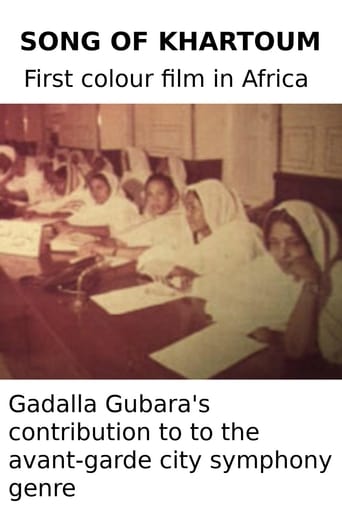
Song of Khartoum
1955
Gubara was proud of the first color film in African cinema, which attempts to give an African response to the city symphony genre by capturing disparate images of daily life in Khartoum and setting it to music, particularly romantic Arabic songs.
More info →
Circumcized
2000
The elder filmmaker makes a strong statement against the practices of circumcision as they performed around Africa and particularly Sudan. The film is typical of the later Gubara films which are determined to take a stand against the tyrannies that are still keeping people down. Gubara has stated that circumcision is "Nothing more than a bad habit".
More info →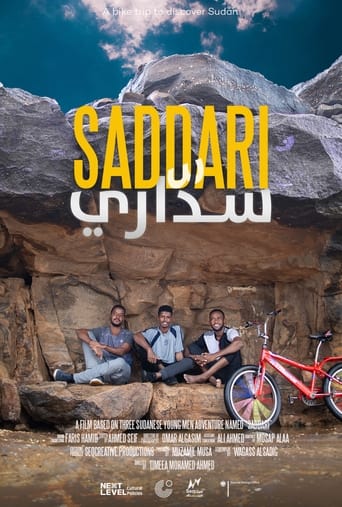
Saddari
2022
Saddari is a story of A 3 Young bikers decide to hit the road to another state for adventure , Ending up embarking on a challenging bike trip across all of Sudan with less than a 100$ In their pockets combined and worn-out bicycles, Facing numerous challenges along the way.
More info →
Don't Cry for Me Sudan
2010 · ★ 8
A Schweitzer of Korea Father LEE Tae-seok, devoted his life in Sudan; a remote area of Africa.
More info →Cinema in Sudan: Conversations with Gadalla Gubara
2008
The film builds up a portrait of a great Sudanese film-maker, Gadalla Gubara. At eighty-seven, he is one of the pioneers of cinema in Africa. He has recently lost his sight but still continues to film life in Sudan as no one before him. Through his oeuvre, Gadalla reveals to us a Sudan both mysterious and misunderstood. Despite censorship and lack of financial support over sixty years, he has produced cinema that is independent and unique in a country where freedom of expression is a rare luxury.
More info →Across the World with Mr. and Mrs. Johnson
1930 · ★ 7.5
As if they were showing their film to a few friends in their home, the Johnsons describe their trip across the world, which begins in the South Pacific islands of Hawaii, Samoa, Australia, the Solomons (where they seek and find cannibals), and New Hebrides. Thence on to Africa via the Indian Ocean, Suez Canal, North Africa, and the Nile River to lion country in Tanganyika. (They are briefly joined in Khartum by George Eastman and Dr. Al Kayser.) Taking a safari in the Congo, the Johnsons see animals and pygmies, and travel back to Uganda, British East Africa, and Kenya.
More info →
A Different Kind of Gun
2007 · ★ 7
"The reason why they kill people is because they do not have any education," a Sudanese boy says about the bloody conflict in his fatherland. Shortly before, we see images of a bombed school. In this film, the youngest and most innocent generation of Sudanese explains how it deals with the war that is tearing the country apart. Will the orphaned children avenge their murdered parents, or will they forgive the killers and start working on a new life? At any rate, these children's dreams for the future are anything but violent. One of them wants to learn English to be able to liberate his country, another wants to study to "be something," a third wants to become president to bring total peace, and yet another simply wants to be like her grandmother. Despite all the atrocities they have witnessed, the children mainly want to rebuild things, to put an end to the destruction.
More info →