De witte raaf
2004 · 70m · Documentary
Director Entrop follows Lalla Weiss for a year, the spokeswoman of the national Sinti and Roma organisation. Weiss emphasises that the Roma and Sinti have been denied a place in our culture for seven hundred years, and that this is only recently and gradually changing. She herself is the living proof of the fact that things can change: she is married to Kees, a civilian, and as his wife she takes the lead in the traditional male dominated Roma and Sinti societies.
More Like This
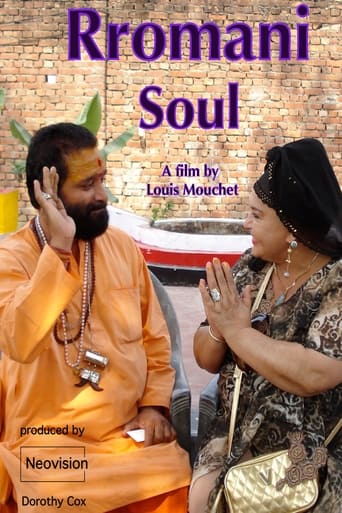
Rromani Soul
2008
RROMANI SOUL traces the true origin of the Rroma people. Through rituals, song and dance we follow emblematic figure and "Queen of the Gypsies" Esma Redzepova to Macedonia, south of France and finally to India. The film reveals for the first time ever that the true and unique origin of the Rroma is Kannauj in Uttar Pradesh, India.
More info →
Mercedes as Butterfly
2024
In the suburbs of Montpellier, France, in the spring of 2024, a Roma wedding celebration is about to begin. In the bedroom of a small apartment, Luisa and her cousins meet up to talk about their dreams, their traditions, and their desire for emancipation. The ritual of flamenco dancing became for Luisa a space of freedom.
More info →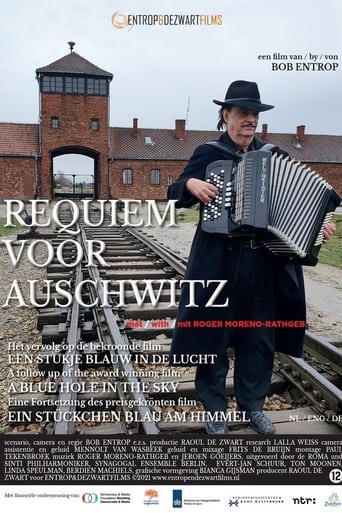
Requiem for Auschwitz - the film
2022
13 years ago, director Bob Entrop made the film A piece of blue in the sky, the first film in the Netherlands that depicted the murder of almost 1 million Sinti and Roma during the Second World War. There is a taboo on what happened during the war, you don't talk about it with anyone and certainly not in front of a camera. Requiem for Auschwitz is a sequel, with the most valuable moments from the first film, supplemented with the grandchildren and the creation and performance of the 'Requiem for Auschwitz' by Sinti composer Roger Moreno Rathgeb by the Sinti and Roma Philharmonic from Frankfurt and a Jewish choir in the Berliner Dom in Berlin, during Holocaust Memorial Day. During his visit to Auschwitz in 2020 with four musicians from the Dutch Accompaniment Orchestra, Roger shows them the places that inspired him.
More info →
Kenedi, Lost and Found
2005 · ★ 5.5
After his participation in filming of “Kenedi Goes Back Home," Kenedi Hasani decided to illegally go to EU countries where his father, mother, brothers and sisters still are. The documentary recounts Kenedi's experience of his two-year refugee status.
More info →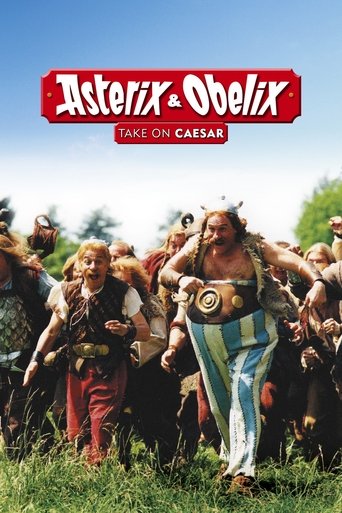
Asterix and Obelix Take On Caesar
1999 · ★ 6
Set in 50 B.C., Asterix and Obelix are living in a small but well-protected village in Gaul, where a magic potion concocted by Druids turns the townsfolk into mighty soldiers. When Roman troops carve a path through Gaul to reach the English Channel, Caesar and his aide de camp Detritus discover the secret elixir and capture the Druid leader who knows its formula, and Asterix and Obelix are sent off to rescue them.
More info →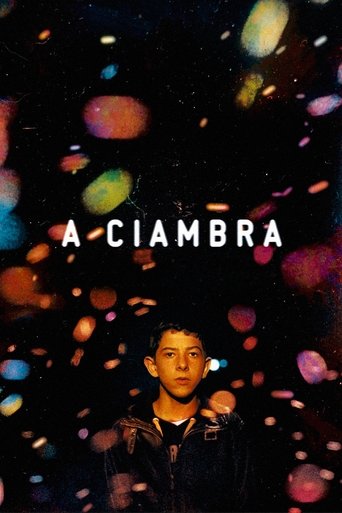
The Ciambra
2017 · ★ 7.1
Pio Amato, a 14 year-old member of a small Romani community in southern Italian town of Gioia Tauro in Calabria, is in a hurry to grow up. Pio follows his older brother Cosimo everywhere and from him he learns how to hustle and how to navigate the streets of his hometown. One night Pio sets out to prove to his brother that he is as good or better than him but, when things go wrong, a series of events will forever change the way he sees the world.
More info →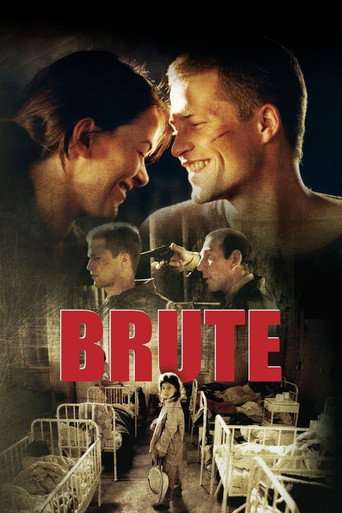
Brute
1997 · ★ 5.7
Shipped off to a Romanian orphanage to finish his sentence, a British criminal finds romance but also discovers corruption inside the facility.
More info →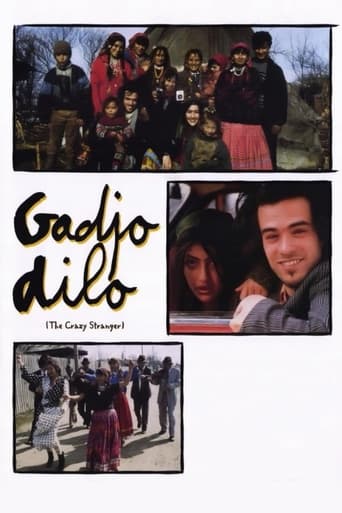
The Crazy Stranger
1998 · ★ 7.4
A man is looking for a singer he had heard on cassette. He finds much more.
More info →
Made in Ash
2012 · ★ 3.7
A grittily realistic tale of prostitution at an Eastern European border town
More info →
Immortality and Resurrection For All!
2017 · ★ 6
The last film in Vidokle's trilogy on Cosmism is a meditation on the museum as the site of resurrection-a central idea for many Cosmist thinkers, scientists and avant-garde artists. Filmed at the State Tretyakov Gallery, the Moscow Zoological Museum, The Lenin Library, and the Museum of Revolution, the film looks at museological and archival techniques of collection, restoration and conservation as a means of the material restoration of life, following an essay penned by Nikolai Federov on this subject in the 1880s. The film follows a cast comprised of present-day followers of Federov, several actors, artists and a Pharaoh Hound that playfully enact a resurrection of a mummy, a close examination of Malevich's Black Square, Rodchenko's spatial constructions, taxidermied animals, artifacts of the Russian Revolution, skeletons, and mannequins in tableau vivant-like scenes, in order to create a contemporary visualization of the poetry implicit in Federov's writings.
More info →