The Bell of Chornobyl
★ 7.8 · 1987 · 88m · Documentary
The first full-length film about the Chornobyl tragedy, filmed in May-September 1986. The authors did not set themselves the task of showing an exhaustive picture of what happened in Chornobyl. They sought to capture the testimonies of people directly involved in the tragedy, the lessons of which have yet to be realized.
More Like This
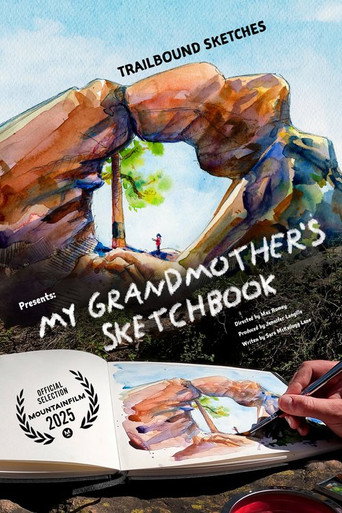
My Grandmother’s Sketchbook: Under Mont Blanc
2025
A 30-year-old sketchbook leads Max Romey to the Mont Blanc region. The Alaska-based watercolor artist and environmental advocate sets out to follow in the footsteps of his grandmother, who visited this landscape in the late 1990s and captured it in dozens of drawings. With mountain guide Hillary Gerardi, Max attempts to locate each sketch’s exact origin point. Many match perfectly—until the Mer de Glace throws him off course. The glacier has changed too much in 30 years to recognize.
More info →

Agatha's Almanac
2026 · ★ 8.3
Defying modernity, 90-year-old Agatha forges a solitary existence on her ancestral farm preserving heirloom seeds.
More info →
The Venetian Dilemma
2005 · ★ 9
Few can resist Venice's magical allure, but with more than 14 million visitors a year, Italy's glorious city of canals faces a number of threats. This documentary examines issues at the heart of Venice's precarious future. Interviews reveal a city in crisis -- politician Roberto plans to modernize Venice, while environmentalist Paolo wages a battle against tourist power-boat shuttles and Michela tries to maintain Venice's residential population.
More info →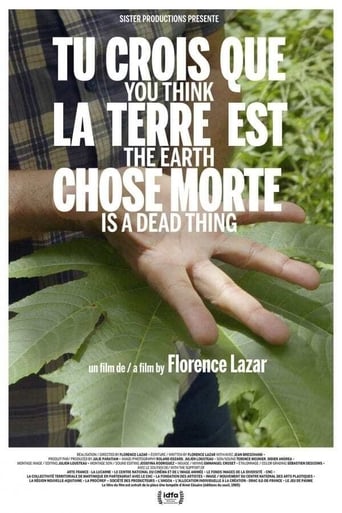
You Think the Earth Is a Dead Thing
2019 · ★ 7.6
Just one of the many far-reaching impacts of the slave trade on human history is on agriculture and horticulture. While the French plantation owners on the Caribbean island of Martinique had their gardens laid out, Versailles-style, their enslaved workers continued their tradition of using medicinal wild herbs. Nowadays these herbs represent one of several resources through which the people of Martinique counter the health and ecological ravage caused by the use of pesticides on the banana plantations. Farmers are reclaiming uncultivated lands to grow indigenous vegetables, without any industrial pesticides; they fight boldly for simple biodiversity.
More info →
The Age of Water
2024 · ★ 7
When the water in her small Mexican town proves to be radioactive, a young mom suddenly finds herself leading a local resistance movement. Her life is upended when she has to face a powerful and corrupt government hellbent on burying the truth.
More info →
Man Uses and Changes the Land
1967
The film discusses the various uses of land for producing food, clothing, and shelter. It explains how different types of land are cultivated for growing crops, raising livestock, and sourcing raw materials for clothing like cotton, wool, and leather. The film also covers the extraction of resources for building materials, such as lumber, clay, stone, and iron ore. Additionally, it touches on the production of plastics and synthetic materials from minerals. The film emphasizes the importance of making wise decisions in land use, balancing agricultural, industrial, and recreational needs, and the necessity of conserving land for its natural beauty and environmental value.
More info →
The Man Who Wanted to Change the World
2016
Peter Westerveld, artist and visionary, doesn’t want institutions to resolve the problems linked to earth’s problems. Growing up in Africa, he witnessed the advance of the desert and dedicated himself to finding solutions for the ongoing erosion and desertification of the land. The film follows Peter and the NGO working with him to realise his project; to build contour trenches that capture and store rain water under the surface and replenish the desert land.
More info →
Watershed: Exploring a New Water Ethic for the New West
2012 · ★ 6
As the most dammed, dibbed, and diverted river in the world struggles to support thirty million people and the peace-keeping agreement known as the Colorado River Pact reaches its limits, WATERSHED introduces hope. Can we meet the needs of a growing population in the face of rising temperatures and lower rainfall in an already arid land? Can we find harmony amongst the competing interests of cities, agriculture, industry, recreation, wildlife, and indigenous communities with rights to the water? Sweeping through seven U.S. and two Mexican states, the Colorado River is a lifeline to expanding populations and booming urban centers that demand water for drinking, sanitation and energy generation. And with 70% of the rivers’ water supporting agriculture, the river already runs dry before it reaches its natural end at the Gulf of California. Unless action is taken, the river will continue its retreat – a potentially catastrophic scenario for the millions who depend on it.
More info →
Time and Water
2026 · ★ 6.3
Facing the death of his country’s glaciers and the loss of his beloved grandparents, Icelandic writer Andri Snær Magnason turns his archives into a time capsule to hold what is slipping away — family, memory, time, and water.
More info →