Náhodné nálezy archeologické
1950 · Documentary
A slide about the importance of accidental archaeological finds for the development of archaeological science and the study of history. The film appeals to farmers and construction workers in particular, urging them to report similar findings immediately.
More Like This
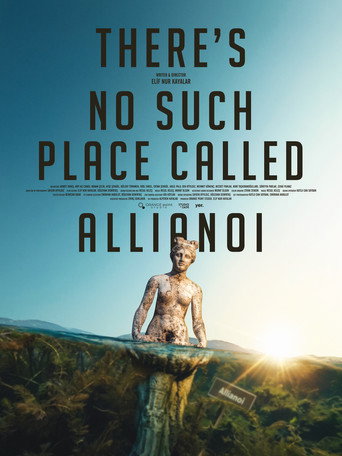
There's No Such Place Called Allianoi
Allianoi, one of the world's best-preserved ancient health centres, was discovered during excavations and later submerged by the construction of a dam in Pergamon, Türkiye. The project gave rise to one of Türkiye's first large-scale civil resistance movements, decades of legal battles and political decisions that shaped the site's fate. For local farmers, the dam promised reliable irrigation after years of waiting. Through personal testimonies, archival materials, animation and footage filmed on location, the documentary tracks a conflict in which cultural heritage and everyday survival became impossible to separate.
More info →
Paris, the Mystery of the Disappeared Palace
2023 · ★ 7.2
In the heart of Paris, an entire palace has disappeared. It was the very first residence of the kings of France. Long before Versailles, long before the Louvre, the Palais de la Cité stood on the most prestigious island in Paris, the historic cradle of France, facing Notre-Dame. So majestic in the Middle Ages, this palace has become a ghost of history. Over the centuries, this architectural masterpiece has almost completely disappeared. A trio of experts will resurrect it in 3D. Using science and unprecedented excavations, they will track down the pieces of the puzzle to reconstruct it at its peak in the 14th century, and bring back to life those who inhabited it. From the Romans to the Vikings, from Saint Louis to the cursed kings, all have left clues of this 'Versailles of the Middle Ages'.
More info →
The Great Wall of China: The Hidden Story
2014 · ★ 5.9
It's the most extraordinary feat of engineering in history, and one of the most iconic man-made structures on the planet - the Great Wall of China, stretching thousands of miles across barren deserts and treacherous mountains before finally plunging into the sea. But why did the Chinese go to such staggering lengths to build it, and what are the secrets that have enabled it to survive for over 2,000 years? Now, ground breaking science is re-writing its complex history and de-coding its mysteries to reveal that there is much more to the Great Wall than just bricks and mortar. Cutting edge chemistry reveals that the secret to the Great Wall's remarkable strength is a simple ingredient found in every kitchen, and a new survey also determines that its length is truly amazing, as we finally solve the enigma at the heart of the world's greatest mega-structure.
More info →
Gladiators: Back from the Dead
2010 · ★ 8
Up to one million gladiators are thought to have died in arenas across the Roman Empire. And, although fascination with gladiators has been high, the details of their lives and deaths remain fragmentary. Now, with the discovery of an ancient Roman burial site containing 80 skeletons thought to be gladiator warriors, National Geographic recreates the world of the Roman arena and how six gladiators lived, fought and died.
More info →
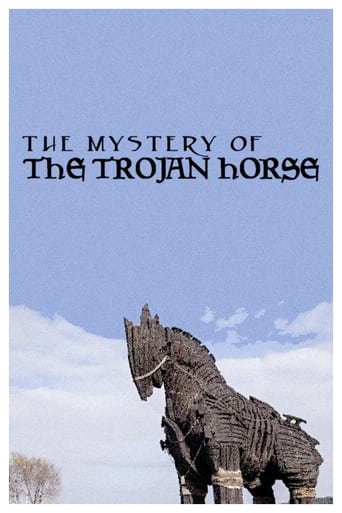
The Mystery of the Trojan Horse
2021 · ★ 7.3
The story of the Trojan Horse is probably one of the most famous stories ever told: after ten years of bloody war, the Greek coalition decides to lift the siege and depart, but not before leaving at the gates a huge wooden horse, which the Trojans confidently lead into the city. A few hours later, the once invincible Troy goes up in flames. What exactly happened? Is this myth true or false?
More info →The Archaeologist and How He Works
1965
Using the example of an expedition to the important archaeological site of Çayönü in Turkey, it explains how an expedition works and how the discoveries are processed.
More info →Indian America: A Gift from the Past
1994 · ★ 8
In 1970 a storm uncovers an ancient whaling village called Ozette which had been buried some 500 years ago by a massive mudslide. The resulting excavation brings new knowledge of the past important to both the Makah Indians, living on the Olympic Peninsula in Washington and for the historical record of Native Americans in the Pacific Northwest.
More info →The quest for Camelot
2026
Mark Horton, a British archaeologist, is investigating King Arthur’s castle. But did it really exist? Camelot, the seat of the court of the legendary King Arthur and Queen Guinevere, where the Knights of the Round Table gathered in the 5th and 6th centuries, could it be a real place, inspired by a Roman-era ruin? Mark Horton travels across Britain to examine medieval texts and post-Roman archaeological sites.
More info →
Die Keltinnen
2023 · ★ 7.2
Recent archaeological discoveries in Germany have changed the way we look at Celtic society and the major role played by women.
More info →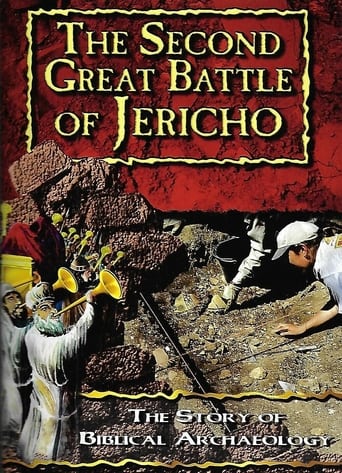
The Second Great Battle of Jericho
1997
For decades, secular archaeologists have regularly announced discoveries that seem to contradict the Bible. A prime example of this was a conclusion by renowned archaeologist Kathleen Kenyon, who stated publicly that the Biblical account of the conquest of Jericho could not possibly be factual. This eye-opening video shows how Biblical Archaeology uncovered the true story about the battle for Jericho. To experience the detective-like quest of Biblical Archaeology, viewers will join an actual dig in Israel to begin a search for Joshua's Ai at Khirbet el-Maqatir with Dr. Bryant Wood and Gary Byers. Become part of the fascinating process of selecting the site, preparing for the excavation, and peeling back the layers of time to reveal the clues to ancient history.
More info →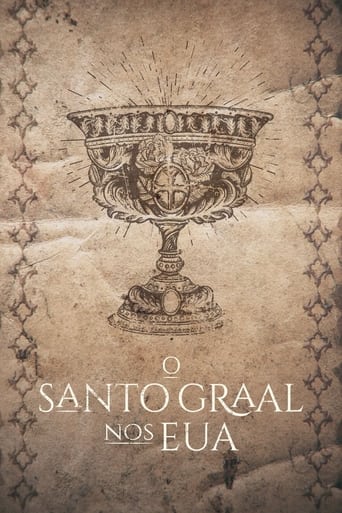
Holy Grail in America
2009 · ★ 5.8
In 1898, a Minnesota farmer clearing trees from his field uprooted a large stone covered with mysterious runes that tell a story of land acquisition and murder. The stone allegedly dates back to 1362. Initially thought to be a hoax, new evidence suggests the find could be real, and a clue that the Knights Templar discovered America 100 years before Columbus, perhaps bringing with them history's greatest treasure... the Holy Grail. Follow the clues as experts use erosion studies on the rune stone and match symbols in Templar ruins all over Europe to support this theory. Stones with similar markings have been found on islands across the Atlantic Ocean, and in Massachusetts and Rhode Island. Is it possible the Knights Templar, long thought to have been massacred, escaped on an incredible journey and were leaving clues to the whereabouts of the stone?
More info →