Afghan Nomads (The Maldar)
★ 8 · 1974 · 21m · Documentary
At dawn a nomad caravan descends on Aq Kupruk from the foothills of the Hindu Kush. In their camp, and in commerce with the townspeople, the Maldar reveal the mixture of faith and distrust that has kept nomads and sedentary people separate and interdependent over the centuries. The theme of the film focuses on political and religious beliefs. The film and accompanying instructor notes in this series embrace five different and complex units of analysis concerning how political change occurs; individual attitudes, ethnic identity, national loyalties, institutional affiliations, and ideological beliefs.
More Like This

Harlem School 1970
1970
A unique 'direct cinema' feature length documentary (no narration or interviews) originally filmed in the Spring of 1970 and concluded during the Summer of 2017 (footage added, restored, and re-edited). A day in the life of an inner-city Harlem elementary school. In 2018 filmmaker Phil Gries reunited with seven of his former Harlem elementary students whom he hadn't seen in 50 years.
More info →
An Unholy Dance
2026
Every winter, a small town in Castilla-La Mancha called Luzón transforms into a little hell. Its inhabitants, dressed as devils, venture into the darkness and roam its streets with horns, bells, and smeared with soot. Una dança non sancta could have been just an anthropological documentary. Instead, it delves into the inferno with the town’s residents to participate in and immortalize this unholy ritual.
More info →
Ghostland: The View of the Ju'Hoansi
2017 · ★ 8.3
Remember the culture clash in THE GODS MUST BE CRAZY? This time it's real. One of the most ancient cultures on our planet is undergoing a major change. The Ju/Hoansi Bushmen in Namibia are not allowed to hunt anymore and need to converge with our so called “civilized” lifestyle. For the first time the Ju/Hoansi Bushmen travel through the Kalahari and then right into the heart of Europe. What starts as a look at their fascinating culture becomes an even more fascinating look at our Western lifestyle. A warm and humorous reflection of our habits through the eyes of people who are about to give up their million year old traditions.
More info →
Come Back, Sebastiana
1953 · ★ 5.6
The story of a poor girl who leaves her starving family and sheep for a more prosperous village. Her grandfather finds her and tries to convince her to return to her home.
More info →
Ainu Puri
2024
Shigeki, one of the Ainu people of northern Japan, follows the traditions of his ancestors and teaches his son Motoki about their heritage. But how can old customs be revived after centuries of suppression?
More info →
Moana
1926 · ★ 6.7
In the South Seas, Samoan village life is portrayed with a painterly eye. Blending ethnographic detail with a romanticized 'Gauguin idyll', the film celebrates daily rituals, communal traditions, and the passage into adulthood, suffused pride of beauty and pride of strength.
More info →
Germaine chez elle
1994
In front of Jean Rouch's camera, Germaine Dieterlen recalls her ethnographic itinerary, at the Musée de l'Homme, in Mali and in the Paris of the 1930s.
More info →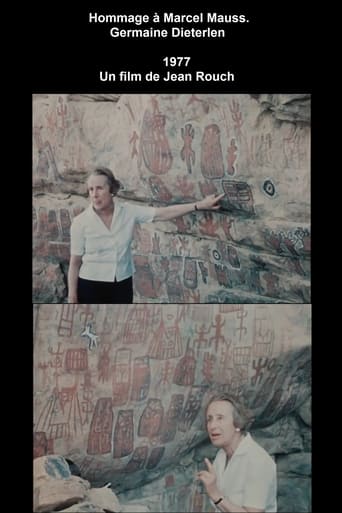
Hommage à Marcel Mauss. Germaine Dieterlen
1977
Germaine Dierterlen talks about Dogon mythology at a conference on the Bandiagara cliffs. The Songo canopy is a sacred site in Bandiagara. Its walls are covered with paintings depicting the different phases of creation. A little further on, in a cave near the village of Bongo, symposium participants are discussing the Tellem, the people who lived in the houses built into the cliffs before the arrival of the Dogon. The archaeological remains and migratory movements of these two peoples are discussed.
More info →
Germaine et ses copains
1996
In Sangha, through the window of her house, Germaine greets Djamgouno, her main informant. He then translates for her a conversation she has with a half-blind old man. She recounts her memories of a past party at which Amadigné worked with her as an informant. Later, in front of the cliff, Germaine, Djamgouno and Pangalé are sitting on rocks, and Germaine talks about the many caves that can be visited by climbing small spelunking ladders. Rouch intervenes during the interview, asking the protagonists about the settlement of the cliff by the Dogon, who learned from the Tellem how to climb the cliff. Rouch then asks about the Tellem's predecessors who lived there 2,400 years ago. Germaine admits the ignorance of researchers on the subject, and Rouch concludes by joking about the new task that now falls to Germaine Dieterlen.
More info →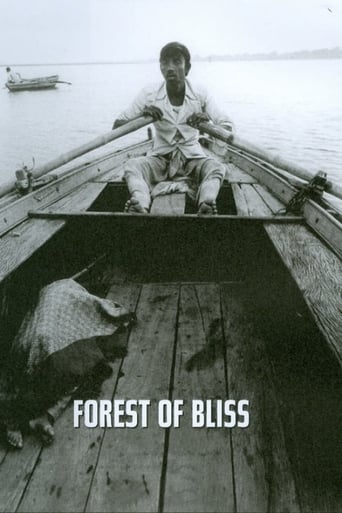
Forest of Bliss
1986 · ★ 6.8
Forest of Bliss is an unsparing yet redemptive account of the inevitable griefs, religious passions and frequent happinesses that punctuate daily life in Benares, India's most holy city. The film unfolds from one sunrise to the next without commentary, subtitles or dialogue. It is an attempt to give the viewer a wholly authentic, though greatly magnified and concentrated, sense of participation in the experiences examined by the film.
More info →