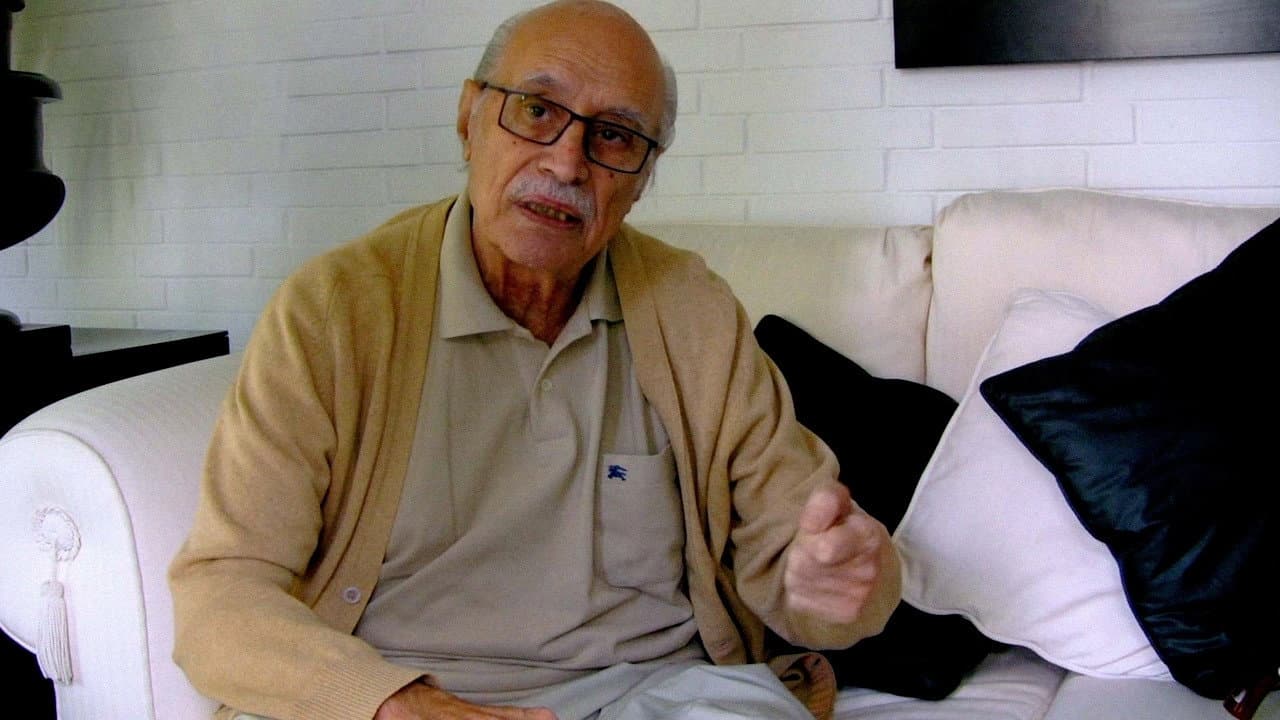
Antonio García-Trevijano: Transición e historia política de España en primera persona
★ 4 · 2021 · 64m · Documentary · History
Spanish jurist and republican thinker Antonio García-Trevijano (1927-2018) expounds his political thought and reflects on the recent political history of Spain.
More Like This
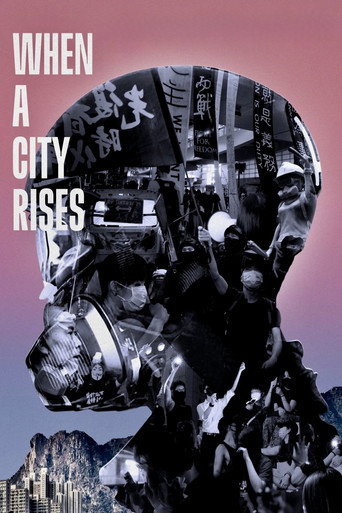
When a City Rises
2021 · ★ 7
Behind the gas masks of Hong Kong’s democracy movement, the often very young activists are just as diverse as the youths of the rest of the world. But they share a demand for democracy and freedom. They have the will and the courage to fight – and they can see that things are going in the wrong direction in the small island city, which officially has autonomy under China but is now tightening its grip and demanding that ‘troublemakers’ be put away or silenced. Amid the violent protests, we meet a 21-year-old student, a teenage couple and a new father.
More info →
Anarchy Movie '85
1985 · ★ 10
On December 1st, 1985 British post-punk band Public Image Ltd. performed in Nagoya City Hall, Japan. This concert film includes an interview with singer Johnny Rotten (aka John Lydon) on a high-speed Bullet Train, where he acts in typical Lydon fashion, that being obnoxious. This film is a total rarity, as it was only released in Japan.
More info →
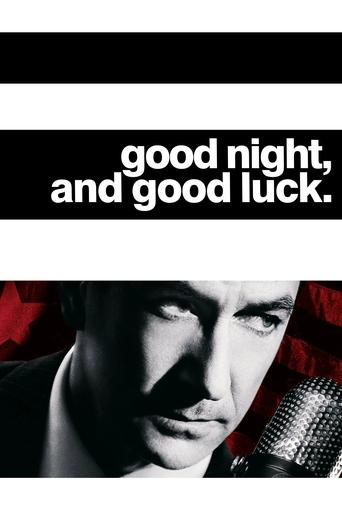
Good Night, and Good Luck.
2005 · ★ 7.1
The story of journalist Edward R. Murrow's stand against Senator Joseph McCarthy's anti-communist witch-hunts in the early 1950s.
More info →
The Yes Men
2003 · ★ 6.8
A comic, biting and revelatory documentary following a small group of prankster activists as they gain worldwide notoriety for impersonating the World Trade Organization (WTO) on television and at business conferences around the world.
More info →
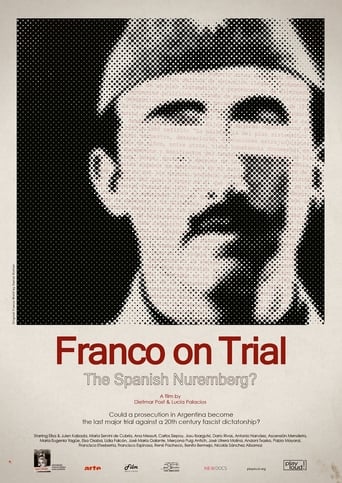
Franco on Trial: The Spanish Nuremberg?
2018
Franco on Trial is the new film by Dietmar Post and Lucía Palacios. After the success of Franco's Settlers, their first encounter with Franco's dictatorship, they are now setting their sights on one of the darkest chapters of European history: the presumed organized extermination that took place during the coup, the war, and the subsequent dictatorship led by Franco, as well as Argentina's current effort, by invoking the principle of universal jurisdiction, to prosecute Francoists accused of committing crimes against humanity. The film is also a sore reminder of an issue that still stands today: the clear-cut accountability held by Germany, Italy, and Portugal. The film accomplishes to give both sides a voice - those against whom the killing has been directed; and the side of the perpetrators.
More info →
Lessons in Dissent
2014
A vivid portrait of a generation of Hong Kongers committed to creating a new more democratic Hong Kong. Schoolboy Joshua Wong dedicates himself to stopping the introduction of National Education. Whilst former classmate Ma Jai fights against political oppression on the streets and in the courts. Catapulting the viewer on to the streets of Hong Kong and into the heart of the action. The viewer is confronted with Hong Kong's oppressive heat, stifling humidity and air thick with dissent. Filmed over 18 months this is a kaleidoscopic, visceral experience of their epic struggle.
More info →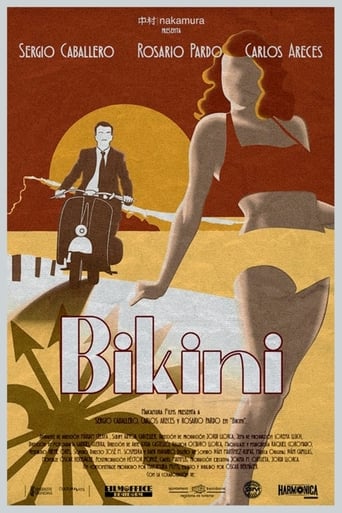
Bikini
2014 · ★ 6.4
Spain, 1953. Pedro Zaragoza, mayor of the city of Benidorm, in the province of Alicante, by the Mediterranean Sea, visits the Palacio del Pardo, General Franco's residence in Madrid, to ask him for help, in the hope of solving a very delicate problem.
More info →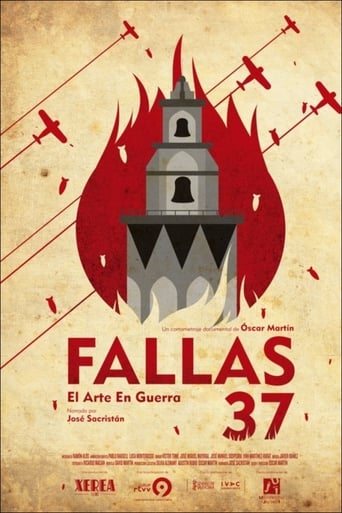
Fallas 37: el arte en guerra
2013 · ★ 6
In November 1936, a few months since the beginning of the Spanish Civil War, the government of the Second Republic moves to Valencia. In this situation, several Valencian artists and intellectuals decide to build four fallas — satirical plasterboard sculptures created to be burnt — to mock fascism.
More info →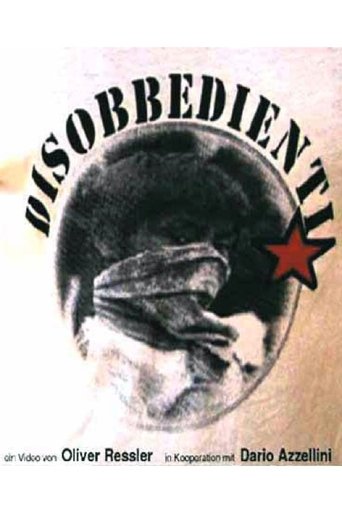
Disobbedienti
2002 · ★ 5
The Disobbedienti emerged from the Tute Bianche during the demonstrations against the G8 summit in Genoa in July 2001. The “Tute Bianche” were the white-clad Italian activists who used their bodies – protected by foam rubber, tires, helmets, gas masks, and homemade shields – in direct acts and demonstrations as weapons of civil disobedience. The Tute Bianche first appeared in Italy in 1994 in the midst of a social setting in which the “mass laborer,” who had played a central role in the 1970s in production and in labor struggles, was gradually replaced in the transition to precarious post-Fordist means of production. “Disobbedienti” thematizes the Disobbedienti’s origins, political bases, and forms of direct action on the basis of conversations with seven members of the movement.
More info →