Vom Glanz und Vergehen der Gruppe 47
2008 · 45m · Documentary
Founded in 1947, “Group 47” made half‐yearly authors read publicly and endure brutal critique, launching postwar German literature (including Nobel winners). Its 1967 end still influences writers; veterans recall its power, while Kehlmann and Biller debate a modern equivalent.
More Like This
Tunisian Literature at the French National Library
1986
Commemorating the 1986 Tunis-Paris exhibition Privileged Spaces and Times: French-Speaking Intellectual Production in Tunisia, Sarah Maldoror’s film points the way toward a more polyvocal understanding of the role of France’s National Library worldwide.
More info →

Alejandra
2013 · ★ 7
The film tells the story of Alejandra Pizarnik: mythic Argentine poet who committed suicide at the age of 36. Her personal diaries, letters, poems, as well as accounts by close friends and family, offer us hints about the mysterious path that led her to her self-destruction. Years after its writer’s death, the poetry of Alejandra Pizarnik has been rediscovered by new generations of writers and readers, making her the most read Argentine poet in the world.
More info →
The Cinema and its Double: Rainer Werner Fassbinder's 'Despair' Revisited
2011 · ★ 6.5
This absolutely top-notch documentary by Robert Fischer is a fascinating look back at not just the film in question, but Fassbinder's meteoric career which ended all too soon with his untimely death. Archival footage of Fassbinder is utilized (including several fascinating snippets culled from interviews he did at the disastrous Cannes premiere of Despair), as well as many others involved in the film and its release. Even if you're not a particular fan of Despair, or even in fact of Fassbinder, this is stellar documentary film making and is an intriguing look at one of the most enigmatic masters of the New German Cinema.
More info →I, Of Whom I Know Nothing
2014 · ★ 5
John Calder, Samuel Beckett’s British publisher, moved to Montreuil, a town to the east of Paris, where Calder met with Billie Whitelaw, the muse, so to speak, of Beckett’s stage work, who is now relegated to a nursing home for actors.
More info →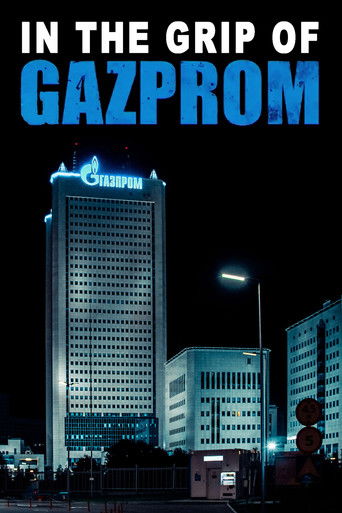
In the Grip of Gazprom
2023 · ★ 8.3
The war in the Ukraine has changed the way many European countries view Russian politics. Suddenly it became clear how dependent countries had become on Russian gas imports for decades and what Vladimir Putin was up to. However, no country needs more gas than Germany. It was only after Russia's invasion of the Ukraine that the German government realized that Russia had long used gas as a weapon to impose its will on states. The instrument created for this purpose is the natural gas production company GAZPROM. So how did Germany become so dependent on Russian gas? The documentary shows how, over several decades and several changes of government, a broad alliance of politicians and business representatives did everything possible to secure Germany's energy supply with cheap Russian gas, while the Kremlin's foreign policy became increasingly aggressive and the warnings of experts went unheeded.
More info →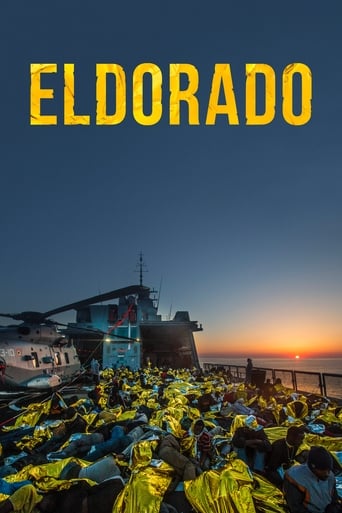
Eldorado
2018 · ★ 5.8
Drawing inspiration from his personal encounter with the Italian refugee child Giovanna during World War II, Markus Imhoof tells how refugees and migrants are treated today: on the Mediterranean Sea, in Lebanon, in Italy, in Germany and in Switzerland.
More info →

In the Rain
2017
Euritan is a review of the narrative 'Klara eta biok', written by Itxaro Borda in 1985. Putting the author against the words of her past, it updates her view on the peripheral relationship around the Basque character.
More info →