Historia antigua del cine España
2017 · 75m · Documentary · History
During the Cold War, while the great powers fight for nuclear supremacy, a uranium mine is opened in Albalá, in the Spanish province of Cáceres, as well as a movie theater, a symbol of the prosperity of the village from then until its closure in 1975.
More Like This
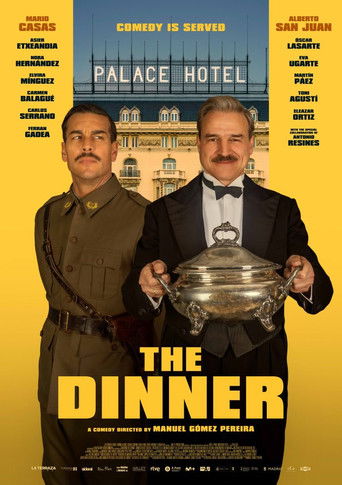
The Dinner
2025 · ★ 6.9
Spain, April 15, 1939. With the Civil War concluded, and with the intention of celebrating his victory, General Franco attends a dinner with his generals at the Palace Hotel.
More info →
Històries de Bruguera
2012 · ★ 6
The history of Bruguera, the most important comic publisher in Spain between the 1940s and the 1980s. How the characters created by great writers and pencilers became Spanish archetypes and how their strips persist nowadays as a portrait of Spain and its people. The daily life of the creators and the founding family, the Brugueras. The world in which hundreds of vivid colorful paper beings lived and still live, in the memory of millions, in the smile of everyone.
More info →
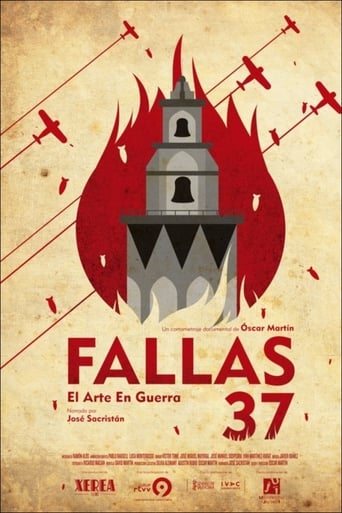
Fallas 37: el arte en guerra
2013 · ★ 6
In November 1936, a few months since the beginning of the Spanish Civil War, the government of the Second Republic moves to Valencia. In this situation, several Valencian artists and intellectuals decide to build four fallas — satirical plasterboard sculptures created to be burnt — to mock fascism.
More info →
Marisol: llámame Pepa
2024 · ★ 6.7
A portrait of the actress and singer Pepa Flores, an incarnation of the recent history of Spain, who, in just twenty-five years of intense career, went from being Marisol, child prodigy of the Franco dictatorship, to being one of the first communist militants, icon of the Transition; an idol of the masses who became a discreet person after having claimed her right to remain silent.
More info →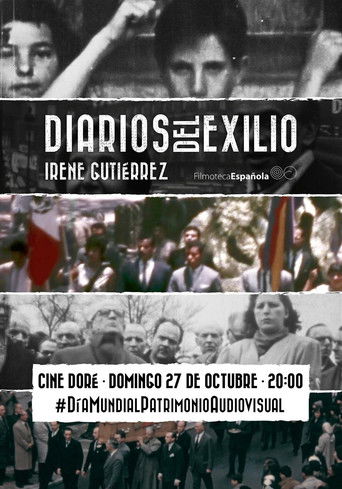
Exile Diaries
2019
A documentary made with homemade videos of the spanish exiled due to the dictatorship in Spain from 1939 to 1977.
More info →
La Antorcha de los Éxitos: Cifesa (1932-1961)
2022 · ★ 4.3
The amazing story of Cifesa, a mythical film production company founded in Valencia by the Casanova family that managed to dominate the box office during the turbulent times of the Second Spanish Republic, the carnage of the Civil War and the hardships of the long post-war period and Franco's dictatorship — and survive until the sixties, when Spain was timidly beginning to change.
More info →
Todos los nombres de Sara
2019 · ★ 4
Born in Campo de Criptana, a small village in the Spanish region of La Mancha, Sara Montiel (1928-2013) conquered Mexico, Hollywood, and the hearts of people. The recognition of an unparalleled professional career, an intimate dialogue with a tireless worker who took the stage at the age of twelve and never got off. A movie star who seduced millions of viewers around the world, a singer who reinvented a musical genre, a woman who broke the mold…
More info →
Wild Session
2019 · ★ 6.8
A walk through the golden age of Spanish exploitation cinema, from the sixties to the eighties; a low-budget cinema and great popular acceptance that exploited cinematographic fashions: westerns, horror movies, erotic comedies and thrillers about petty criminals.
More info →
Castigats
2010
It symbolizes the experience of people without any political involvement who suffered repression in Franco's Spain.
More info →