A REVOLUCIÓN (É) PROBABLE
2022 · Documentary
More Like This
BULIR
2024
All the stories told, all the memories, dreams and lost moments were left in a tank from other generations.
More info →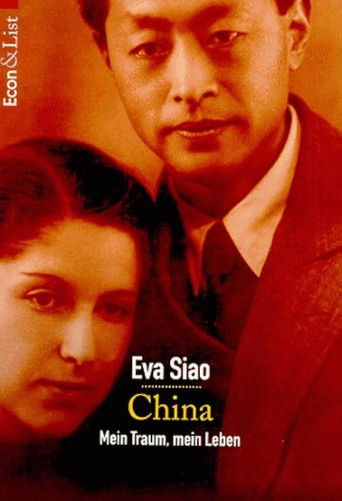
China: My Dream, My Love, My Hope
1992
Eva Sandberg was born in Breslau in 1911, the daughter of a Jewish doctor, and grew up in Bad Landeck, a town in Silesia in what is now Poland. As a child, she had a dream: one day, the Emperor of China would ask for her hand in marriage. After studying photography in Munich and spending time in Stockholm, she traveled to the mysterious Soviet Union in 1934, where she met the love of her life, Chinese writer Emi Siao. Eva followed her husband to China, but not without fear.
More info →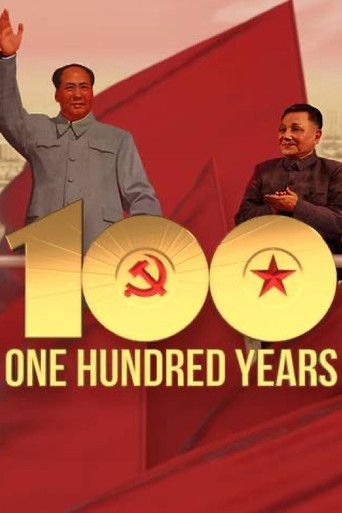
100 Years
2021
As the Communist Party of China celebrates its 100th anniversary, this documentary looks back at the party’s history, from the 1920’s, to the Civil War, the Great Leap Forward, the Great Famine, the Cultural Revolution and the reforms by Mao Zedong and Deng Xiaoping. Did the Great Famine cost more than 15 million lives? How does the Cultural Revolution continue to shape Chinese politics today? What was capitalism like after Mao’s death? Through rare and never-before-seen historical footage, expert interviews and eyewitness accounts of the Great Famine, Tiananmen incident, and the Cultural Revolution, get to know how one party has so profoundly shaped China.
More info →
Heavy Architecture
2007
Documentary about 4 large architectural landmarks that projected Portugal abroad.
More info →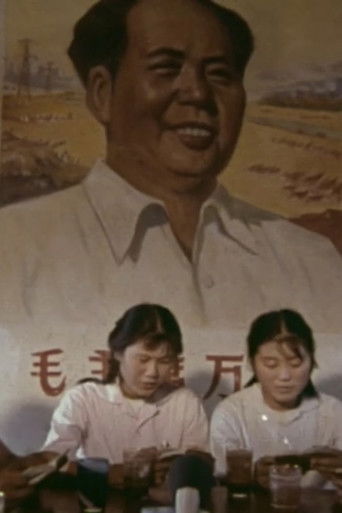
Red Guards after The Cultural Revolution
1972
Red Guards were a student movement supported by Mao Zedong in 1966-67 during the Cultural Revolution. A group of students at Qinghua University who issued 2 big-character posters in May-June 1966 called themselves Red Guards. The students criticised the university administration of elitism and bourgeois tendencies. In August 1966 Mao Zedong expressed support for the Red Guards. This gave the student movement political legitimacy and it spread outside Beijing. The Red Guards started to attack the Four Olds and marched across China to eradicate old ideas, old cultures, old customs and old habits. Ultimately the struggle between different Red Guard factions led to a chaotic civil-war-like situation. During 1967-68 the Peoples Liberation Army got the movement under control and restored social order. Beginning late 1968 members of the Red Guard movement were sent to the countryside to undergo re-education. We met and filmed them in August 1971.
More info →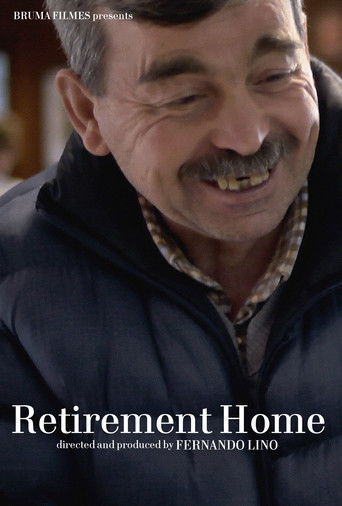
Retirement Home
2017 · ★ 10
A group of elders spends their weekdays in a retirement home in Sandim, in the north of Portugal, where they talk, do arts and crafts, practice yoga and pray. We follow them between October 2012 and March 2013, when an economic crisis overshadowed Portuguese society and unemployment rates reached record levels. Meanwhile, arrangements are made for the Carnival ball. Will they bring the first place home this time?
More info →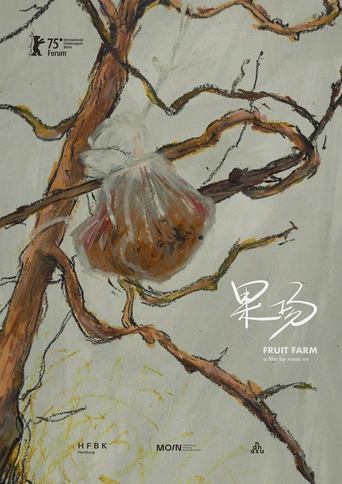
Fruit Farm
2025 · ★ 8
Nana Xu travels to the place built by her father as a prisoner during the Cultural Revolution: first a work camp, later a prison, fruit farm and treatment centre. Conversations with last remaining witnesses, where home is still shaped by a repressed past.
More info →
July 10
2017 · ★ 10
A date that will remain in Portuguese football history forever – July 10, 2016, the day Portugal became European champions.
More info →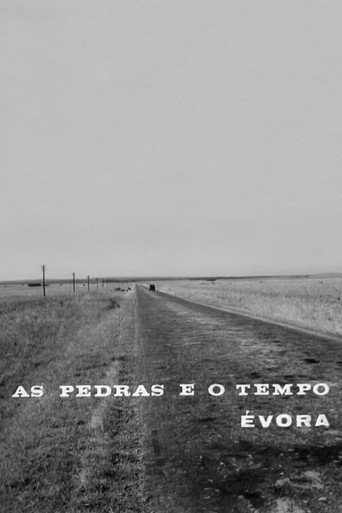
As Pedras e o Tempo
1961 · ★ 8
Documentary short film on the city of Évora, Portugal. Usually regarded as the first film of the Portuguese New Wave.
More info →Ah Fung
1988
Takes a look at the Peking Opera artist, Ah Fung, who defected to the United States after the Cultural Revolution and is now a dishwasher in Los Angeles' Chinatown
More info →
Viagens - 20 Years
2014
A behind-the-scenes look at "Viagens", one of the greatest portuguese records of the 1990s, in the year of its 20th anniversary.
More info →
Star Trek: The True Story
2013 · ★ 1
Documentary covering the current state of both the theoretical and practical development of the various scientific basic principles that served, as per Gene Roddenberry's dictum, as a believable basis at the time for The Original Series. Several real-world scientists are interviewed, not a few of them unabashedly admitting they went into their chosen field of profession because of Star Trek: The Original Series.
More info →