Kites in Sahara
2010 · 8m · Documentary
Short film filmed in February 2010 at the Sahrawi refugee camps in Tindouf (Algeria). A poetic look into the situation that refugees go through and into the conflict itself. Soundtrack by Palestinian musicians and Spanish rock band Amaral. “We want words that fly freely, like comets, we want to be the irrepressible wind that comes and goes… And can’t ever be trapped in any sand prison… We want words that fly freely. Invincible. Like comets…”
More Like This

Gurba, the condemned
2014
Siya, Dumaha, Mata and Aziz are Saharawi refugees that live in camps in Tindouf (Algeria). They show us the daily extreme harshness of an exile that lasts for 40 years. We can discover the unknown reality of torture, mines and maimed people, child malnutrition or mental illnesses that plague the Saharawi people, who are condemned to live away from their homeland.
More info →Cast in sand: Najla and Agaila
2013
Two women of different generations struggle for survival, happiness, and freedom in barren desert refugee camps. Here, the displaced people of Western Sahara have rebuilt life after fleeing from Morocco's brutal occupation from their homeland, and continue to cry out for justice. Najla and Agaila's different relationships to their cause reflect their personal narratives, revealed and explored with an intimate approach.
More info →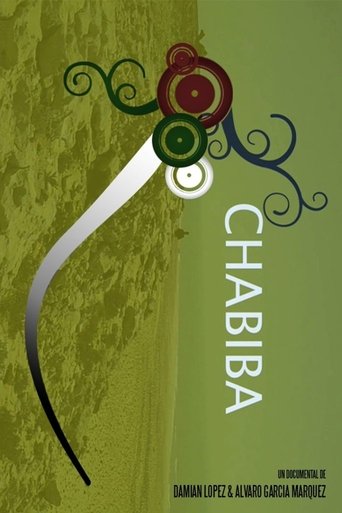
Chabiba
2013
In Hassaniya, the mother tongue of the Sahrawi people "Chabiba" means youth. In the Sahrawi tradition conversations, revolves around a good tea. According to the usual three Sahrawi teas.El take first tea is bitter as life, the history, the life of this people is bitter, because they were first colonized, abandoned, busy and eventually went to war with a neighboring country. The second sweet tea like love, the sweetest part of this conflict is the international status because all international law states that the solution to the conflict goes through a referendum. The third area is soft as death, remained behind war, armed struggle, we are in a part of the struggle of the people much smoother, as the third tea.
More info →Sea of sand
2013
This documentary explains the problems of Western Sahara while occupied by Morocco, the territories liberated by the Polisario Front, and the refugee camps in Tindouf (Algeria). 40 years of human rights violations, cultural, human and economic despoliation (fishing, phosphates,...), but also of resistance, fighting back, dignity, solidarity; and most of all, the women’s defining role in the establishment of a forcefully exiled population in one of the most inhospitable places on the planet.
More info →A garden that means more than a garden
2023
Taleb, who came to a refugee camp at the age of five in 1975 and returned there after his studies abroad, tells of his life as a displaced person, his gratitude for the reception and support in Algeria, and his hope that the Sahrawis may one day return to their homeland. For Taleb, this hope drives him to actively prepare for better times: as a graduate in agricultural sciences, he conceived a successful small-scale closed-loop economy in a desert under the most difficult conditions, producing enough food for self-sufficiency.
More info →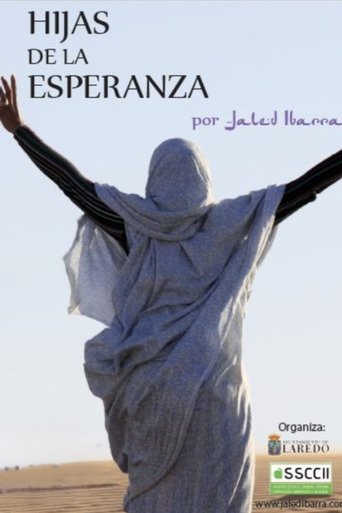
Daughters of hope
2011
Women are the protagonists of this documentary. Girls and women of varied ages tell us the difficulties of living their whole lives in refuge and their desires for the future.
More info →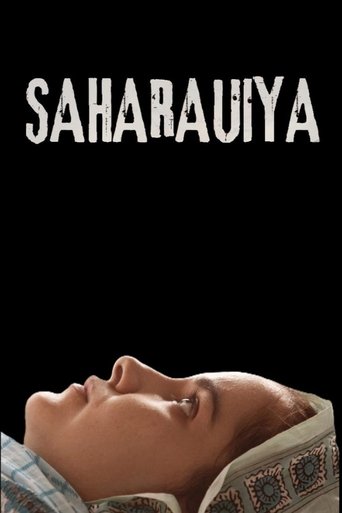
Saharauiya
2012
The documentary is about the sahrawi women’s role carries out from all areas in her society and developes within the framework of the refugee camps in Tindouf (Algeria). Sahrawi women who have different jobs tell us through several interviews their vital experiences and share their opinion about the difficult situation that they suffer. In parallel with these interviews the documentary shows us how is a typical day of a sahrawi family in which a girl and her friend live a little story of fantasy.
More info →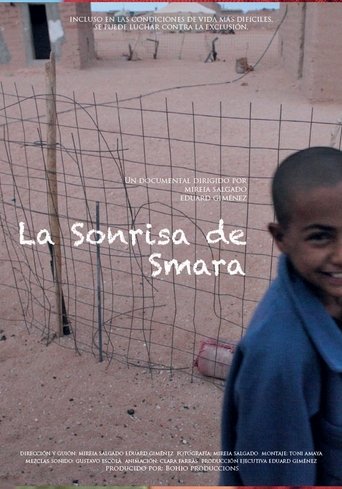
Smara's smile
2012
This is the story of Buyema Abdelfatan, also known as Castro, an ex Saharan soldier that now a days runs a centre for disabled children in the refugee camp of Smara (Tindouf, Algeria). A personal project that has earned him both praise and criticism, but could not continue without his dedication, perseverance and humanitarian aid that he receives.
More info →Sweep the desert
2012
A documentary about the daily lives, hopes, aspirations and demands of though living in the Sahrawi refugee camps of Dajla.
More info →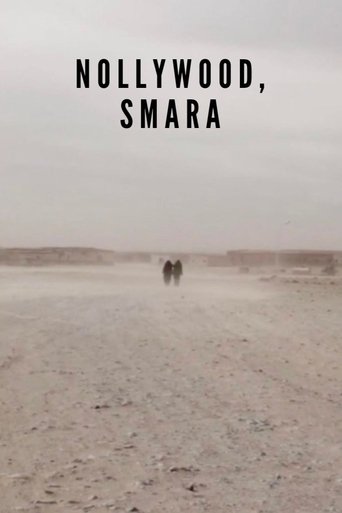
Nollywood, Smara
2011 · ★ 10
Smara is the city of dust, kingdom of sirocco, a surviving ruin of a suffocating region… Thousands of Sahrawis who fled Western Sahara after the war against Morocco (36 years ago) live in this refugee camp, located in the Sahara’s inhospitable north, in the middle of the Algerian hamada. They live here, under poor human conditions, thanks to international help. A small film cooperative fights, with barely any means, to elevate the voices of young Saharawis. It is one of the many Nollywoods (Hollywood of emptiness) found in Africa.
More info →
The ladies of the desert
2011
The film offers an insight into a nearly forgotten world. The times when the Sahrawi war of independence was on the international agenda seem to be long forgotten. The fate of hundreds of thousands Sahrawis living in refugee camps since the 1970s seems not to be spectacular enough for further attention. Inthe film the women get a chance to speak. It is a film about their experiences and hopes. It is mainly a film about life in surroundings where seemingly normal things are real challenges. The film is a simple and impressive portrait of women, who have been fighting against their fate to help their people. They have never lost their drive, no matter how unfavourable the circumstances have been. It reminds us of the fate of the Sahrawi people. The film is realistic, without any kitsch elements. It shows impressive pictures of the real lives of strong women, who have never stopped fighting for independence.
More info →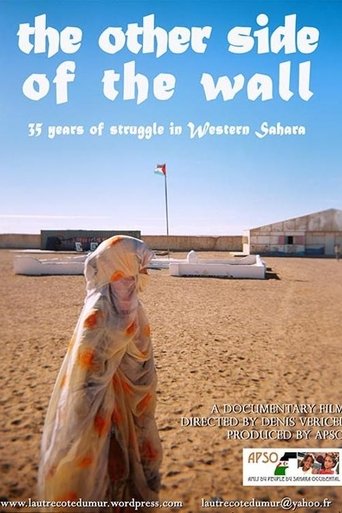
The other side of the wall
2011
The documentary tells how 35 years of struggle of Sahrawi people became the starting of the Arab spring. From both side of the wall, Sahrawi tell us the Story of their country, the story of the last colony of Africa.
More info →