The Mallet
★ 7.7 · 1977 · 11m · Documentary
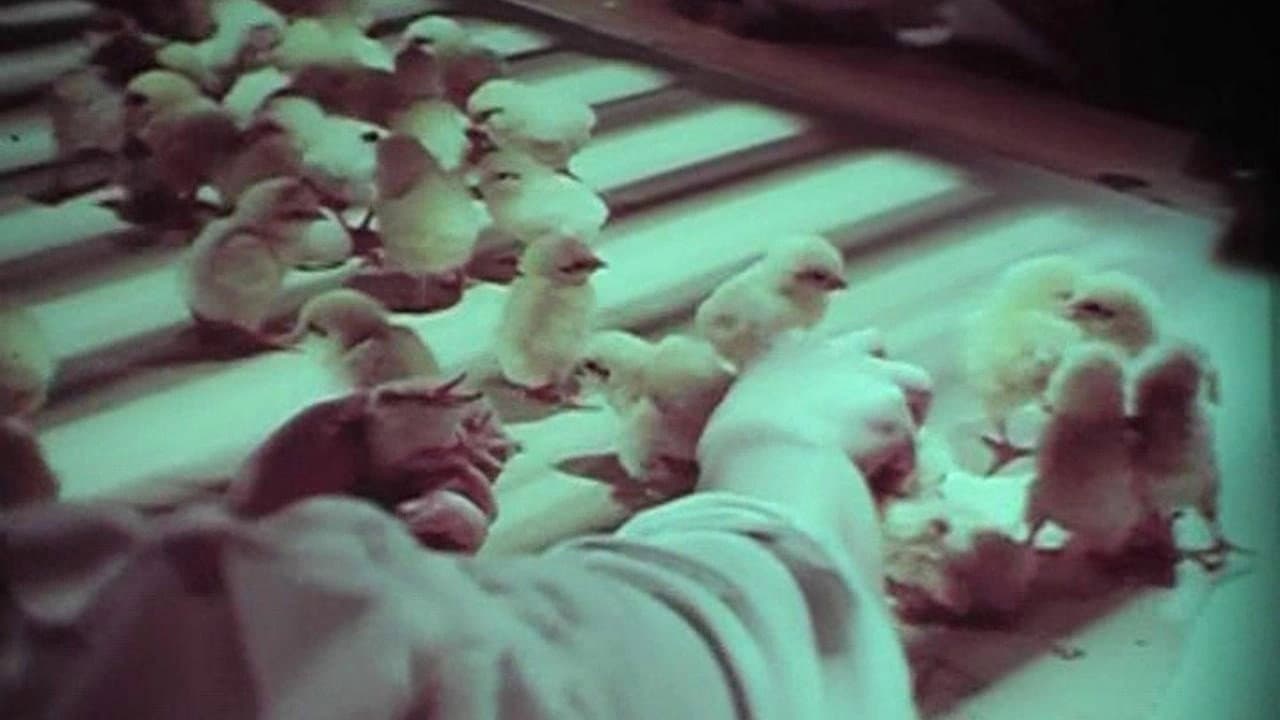
In a futuristic, antiseptic food factory, workers select healthy chicks, while the rejects are carried along a conveyor belt until they are crushed by a mallet and drop into a garbage bin. A single black chick appears among the yellow and is shoved toward the garbage bin. Before the mallet strikes, the gasping chick rebels.
More Like This
Winged Migration
2001 · ★ 7.6
This documentary follows various migratory bird species on their long journeys from their summer homes to the equator and back, covering thousands of miles and navigating by the stars. These arduous treks are crucial for survival, seeking hospitable climates and food sources. Birds face numerous challenges, including crossing oceans and evading predators, illness, and injury. Although migrations are undertaken as a community, birds disperse into family units once they reach their destinations, and every continent is affected by these migrations, hosting migratory bird species at least part of the year.
More info →
Workers Leaving the Lumière Factory
1895 · ★ 6.7
Working men and women leave through the main gate of the Lumière factory in Lyon, France. Filmed on 22 March 1895, it is often referred to as the first real motion picture ever made, although Louis Le Prince's 1888 Roundhay Garden Scene pre-dated it by seven years. Three separate versions of this film exist, which differ from one another in numerous ways. The first version features a carriage drawn by one horse, while in the second version the carriage is drawn by two horses, and there is no carriage at all in the third version. The clothing style is also different between the three versions, demonstrating the different seasons in which each was filmed. This film was made in the 35 mm format with an aspect ratio of 1.33:1, and at a speed of 16 frames per second. At that rate, the 17 meters of film length provided a duration of 46 seconds, holding a total of 800 frames.
More info →
Nous irons jusqu'au bout (les Kaolins de Plemet)
1973
Chronicle of the 9-week strike by the kaolin workers of Plémet. The film emphasizes the particular nature of such a strike in a rural commune and in a sector of the old Breton proletariat: that of subsoil mining, almost entirely liquidated after the closure of the Hennebont forges.
More info →1/57: Experiment with Synthetic Sound (Test)
1957 · ★ 4.7
Mostly dark, rejecting images which are repeated. A stone wall, the chamber of a revolver which is, at first not recognizable, a close-up of a cactus. The duration of the takes emphasises the photographic character of the pictures, simultaneously with a crackling, brutal sound. (Hans Scheugl)
More info →
Hotel Chocolat at Christmas
2024
In the lead-up to the festive bonanza, an exclusive look inside the chocolate-maker's inventing room, and its 'chocolate imaginarium' too. Prepare for special choc drinks and cranberry treats.
More info →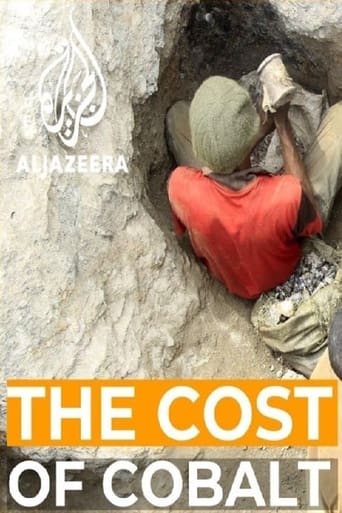
The Cost of Cobalt
2021
In the cobalt mining areas of Katanga in the Democratic Republic of the Congo (DRC), babies are being born with horrific birth defects. Scientists and doctors are finding increasing evidence of environmental pollution from industrial mining which, they believe, may be the cause of a range of malformations from cleft palate to some so serious the baby is stillborn. More than 60% of the world’s reserves of cobalt are in the DRC and this mineral is essential for the production of electric car batteries, which may be the key to reducing carbon emissions and to slowing climate change. In The Cost of Cobalt we meet the doctors treating the children affected and the scientists who are measuring the pollution. Cobalt may be part of the global solution to climate change, but is it right that Congo’s next generation pay the price with their health? Many are hoping that the more the world understands their plight, the more pressure will be put on the industry here to clean up its act.
More info →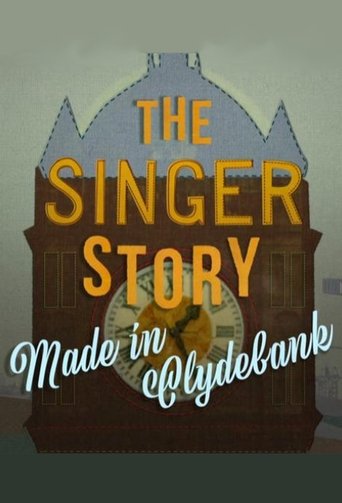
The Singer Story: Made in Clydebank
2019
The Singer sewing machine, international icon and a symbol of the Industrial Revolution, helped put the town of Clydebank on the map. Over the course of a century, it employed tens of thousands of 'bankies' before its demise nearly 40 years ago. This documentary charts the story of those workers: how their lives were intertwined with the fortunes of Scotland’s first US multinational company. The programme pays homage to the Singer machine, and the huge impact it made on families and households all over the world.
More info →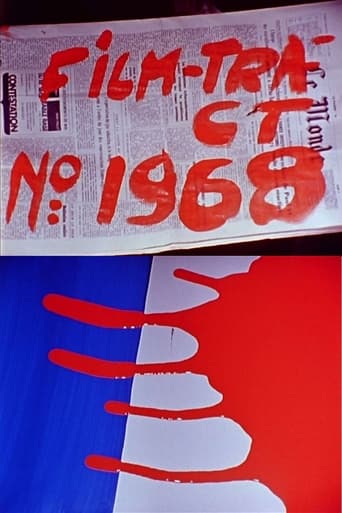
Film-Tract n° 1968
1968 · ★ 6.5
In the 1968 movement in Paris, Jean-Luc Godard made a 16mm, 3-minute long film, Film-tract No.1968, Le Rouge, in collaboration with French artist Gérard Fromanger. Starting with the shot identifying its title written in red paint on the Le Monde for 31 July 1968, the film shows the process of making Fromanger’s poster image, which is thick red paint flows over a tri-color French flag. —Hye Young Min
More info →Clouds
1969
Clouds 1969 by the British filmmaker Peter Gidal is a film comprised of ten minutes of looped footage of the sky, shot with a handheld camera using a zoom to achieve close-up images. Aside from the amorphous shapes of the clouds, the only forms to appear in the film are an aeroplane flying overhead and the side of a building, and these only as fleeting glimpses. The formless image of the sky and the repetition of the footage on a loop prevent any clear narrative development within the film. The minimal soundtrack consists of a sustained oscillating sine wave, consistently audible throughout the film without progression or climax. The work is shown as a projection and was not produced in an edition. The subject of the film can be said to be the material qualities of film itself: the grain, the light, the shadow and inconsistencies in the print.
More info →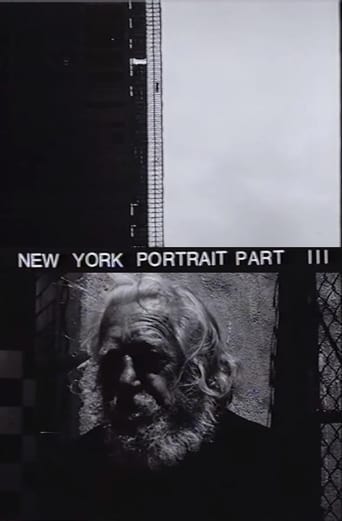
New York Portrait, Chapter III
1990 · ★ 8.3
"[Hutton’s] latest urban film, New York Portrait, Chapter III, takes on a unique tone in relation to Hutton’s ongoing exploration of rural landscape. The very fact that Hutton is dealing with older footage, with archives of memory more than immediacy, gives it a different texture than his earlier New York films. Hutton always found the presence of nature in the city, not only in his many shots of sky and vegetation, but also in the geometry and texture of the city itself, which seemed to project an independence from the human." (Tom Gunning)
More info →