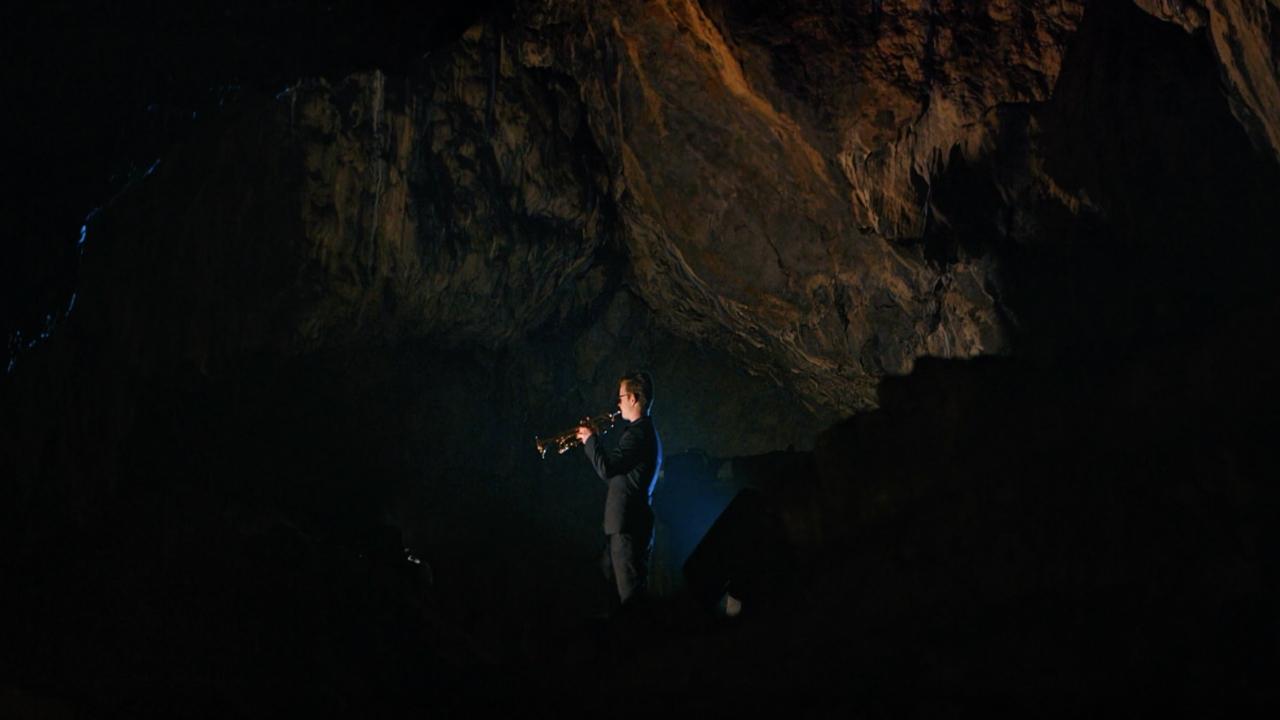
The Unanswered Ives - Wunderkind. Wall-Street-Gigant. Klangpionier
2019 · 53m · Documentary
The Unanswered Ives is the first film about Charles Ives (1874-1954), an American modernist composer, one of the first American composers of international renown. The 60-minute documentary sheds light on Ives' life and work in all its facets and inconsistencies. American singer and composer Frank Zappa included Charles Ives in a list of influences that he presented in the liner notes of his debut album Freak Out! (1966). Ives continues to influence contemporary composers, arrangers and musicians. Planet Arts Records released Mists: Charles Ives for Jazz Orchestra. Ives befriended and encouraged a young Elliott Carter. In addition, Phil Lesh, bassist of the Grateful Dead, has described Ives as one of his two musical heroes.
More Like This
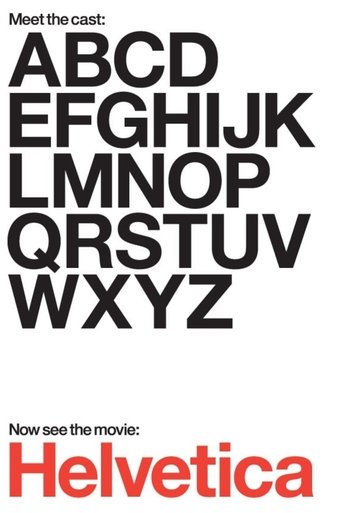
Helvetica
2007 · ★ 7.2
Helvetica is a feature-length independent film about typography, graphic design and global visual culture. It looks at the proliferation of one typeface (which will celebrate its 50th birthday in 2007) as part of a larger conversation about the way type affects our lives. The film is an exploration of urban spaces in major cities and the type that inhabits them, and a fluid discussion with renowned designers about their work, the creative process, and the choices and aesthetics behind their use of type.
More info →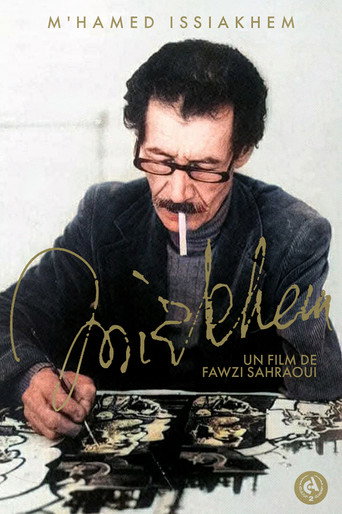
M'hamed Issiakhem
1985 · ★ 10
M'hamed Issiakhem (Kabyle: Mḥemmed Isyaxem; Arabic: محمد إسياخم)—born on June 17, 1928, in Taboudoucht (Aghribs), then part of the Tizi Ouzou Department in Algeria, and who died on December 1, 1985, in Algiers—was an Algerian painter and a leading figure of modern painting in Algeria. In 1943, he handled a grenade stolen from a US military camp, and it exploded; two of his sisters and a nephew were killed. Hospitalized for two years, he underwent the amputation of his left arm. From 1947 to 1951, he studied in Algiers, first at the Société des Beaux-Arts and later at the École des Beaux-Arts. "A country without artists is a dead country... I hope we are alive..." These words were spoken in a film by Fawzi Sahraoui—produced by the RTA in 1985 and shot just months before the painter M'hamed Issiakhem passed away. It is a fascinating docudrama in which Issiakhem opens up with subtlety, passion, and generosity.
More info →
Alternate Spaces
2022
A short documentary on the River Ouse, following it downstream from Lewes to Newhaven, meditating on the surrounding area.
More info →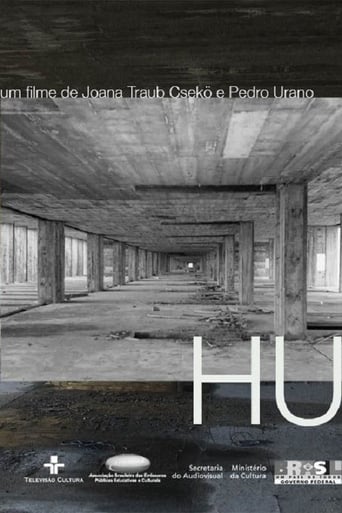
HU
2012 · ★ 4.3
A symmetrically divided building: on one side, an important public hospital, on the other, a bewildering ruin. On the horizon, Rio de Janeiro, public health, education and Brazil’s aged modern project. Shot entirely in the monumental and only partially occupied modernist edifice of the University Hospital of UFRJ. A material metaphor of the Brazilian public sphere and its political maze. A synthesis architecturally expressed of the modernist utopia/dystopia.
More info →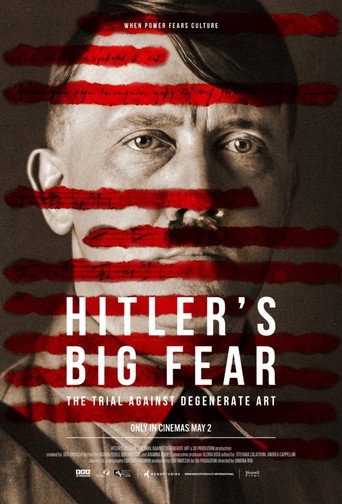
Hitler's Big Fear: The Trial Against Degenerate Art
2026
In 1937, the Nazi regime launched its war on modernity, branding artists like Picasso, Chagall, Van Gogh, and Matisse as “degenerate”. Their works were banned, destroyed, or mocked in grotesque exhibitions, while Aryan ideals were glorified in state-sponsored shows. Framed by a major new exhibition at the Musée Picasso in Paris, the documentary revisits this ideological assault through rare footage, suppressed artworks, and the voices of curators and survivors. It broadens its scope to music, literature, and architecture, exposing how the Reich targeted all forms of dissenting expression. A timely meditation on repression, resistance, and the enduring fight for creative freedom.
More info →
The More We Are Together
1969
A portrait of Eric Lyons and Span, under the scrutiny of Ian Nairn, as well as the residents of their estates.
More info →Mark of the Hand
1987
Guyanese painter Aubrey Williams (1926-1990) returns to his homeland on a “journey to the source of his inspiration” in this vivid Arts Council documentary, filmed towards the end of his life. The title comes from the indigenous Arawak word ‘timehri’ - the mark of the hand of man - which Williams equates to art itself. Timehri was also then the name of the international airport at Georgetown, Guyana's capital, where Williams stops off to restore an earlier mural. The film offers a rare insight into life beyond Georgetown, what Williams calls “the real Guyana.” Before moving to England in 1952 he had been sent to work on a sugar plantation in the jungle; this is his first chance to revisit the region and the Warao Indians - formative influences on his work - in four decades. Challenging the ill-treatment of indigenous Guyanese, Williams explored the potential of art to change attitudes. By venturing beyond his British studio, this film puts his work into vibrant context.
More info →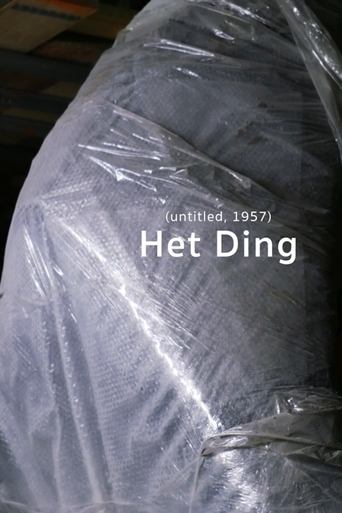
Het Ding (untitled, 1957)
2018
Next to the Bijenkorf on the Coolsingel stands one of Rotterdam’s most famous sculptures, an untitled structure created by Russian modernist artist Naum Gabo, that has been simply called Het Ding (The Thing). This documentary about the restoration of Naum Gabo’s nameless sculpture from 1957 combines awe-inspiring shots of this artwork with audio fragments from Gabo’s fiery Russian manifests.
More info →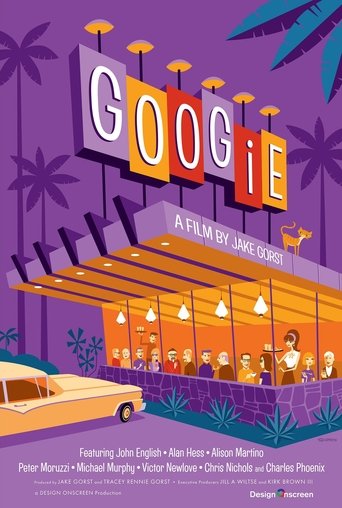
Googie
2026
Googie architecture was one of the most visually exuberant and culturally formative design movements of the mid-20th century, yet it remains widely misunderstood. Defined by bold angles, sweeping rooflines, neon signage, and a sense of space-age optimism, Googie transformed everyday buildings into roadside spectacle. Coffee shops, bowling alleys, car washes, banks, and churches were designed not just for function, but to captivate motorists cruising by. Rooted in Los Angeles, the movement drew inspiration from visionary architects such as Frank Lloyd Wright and John Lautner, while firms like Armet & Davis brought futuristic flair to the commercial landscape. Though many original structures have been lost, preservationists now champion Googie as a serious architectural expression—one that captured the aspirations of postwar America and reshaped the visual identity of the modern city.
More info →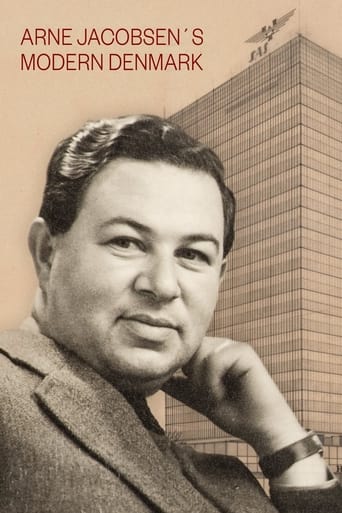
Arne Jacobsen’s Modern Denmark
2021
Danish documentary about the disobedient schoolboy with a talent for painting, who became one of Denmark’s greatest architects. His ideas were ahead of their time and often received criticism, but today, 50 years after his death, Arne Jacobsen's schools, town halls and libraries are still with us, and they define modern Denmark.
More info →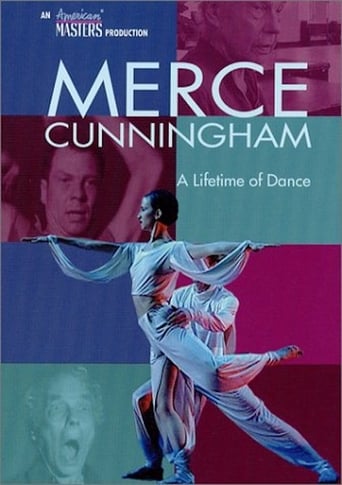
Merce Cunningham: A Lifetime of Dance
2001 · ★ 10
A history of the work of Merce Cunningham.
More info →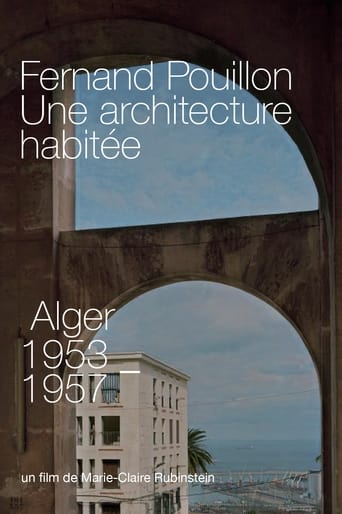
Fernand Pouillon, Une architecture habitée
2017 · ★ 10
In this documentary, Marie-Claire Rubinstein reveals to us, through the testimonies of the inhabitants who live there, the architectural achievements of the French urban planner Fernand Pouillon in Algiers. In particular the vast complexes of hundreds of social housing units, including the most famous Diar E Saâd (1953), Diar El Mahçoul (1954) and Climat de France (1957). The historical context, during the war of independence is related by the historian Benjamin Stora and Nadir Boumaza. This documentary also evokes the personality of Fernand Pouillon in a post-colonial context.
More info →