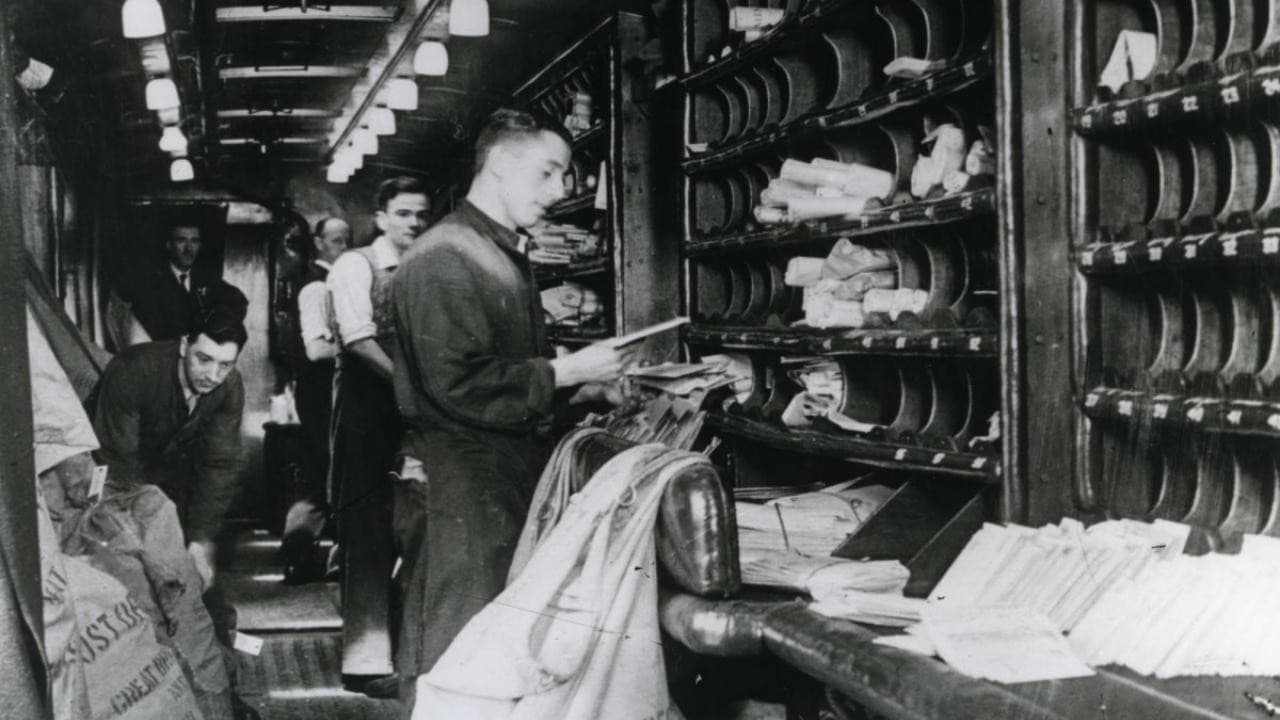
Night Mail
★ 6.2 · 1936 · 25m · Documentary
This documentary short examines the special train on which mail is sorted, dropped and collected on the run, and delivered in Scotland on the overnight run from Euston, London to Glasgow.
More Like This
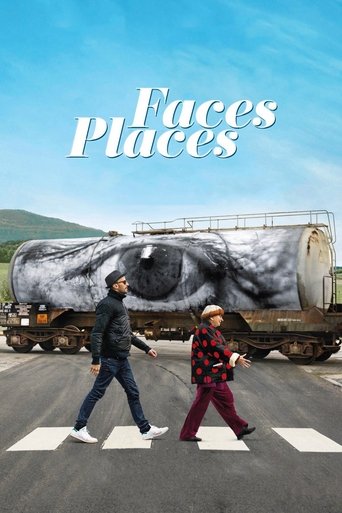
Faces Places
2017 · ★ 7.6
Director Agnès Varda and photographer/muralist JR journey through rural France and form an unlikely friendship.
More info →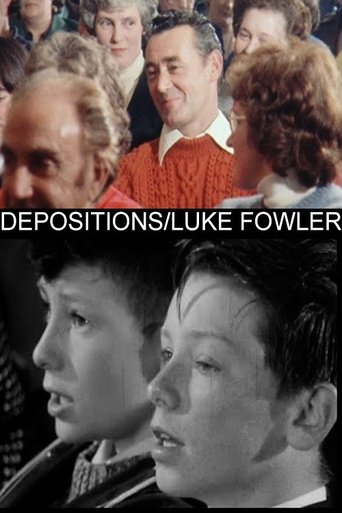
Depositions
2014
The quietly insistent and critical DEPOSITIONS attempts to restore some dignity to images of the communities of the Scottish highlands taken from patronizing BBC documentaries and news features from the 70’s and 80’s. DEPOSITIONS repurposes footage from the archives of the BBC and sound from the School of Scottish Studies, it is a film about differences and dichotomies: science and superstition, near and far, community and the individual.
More info →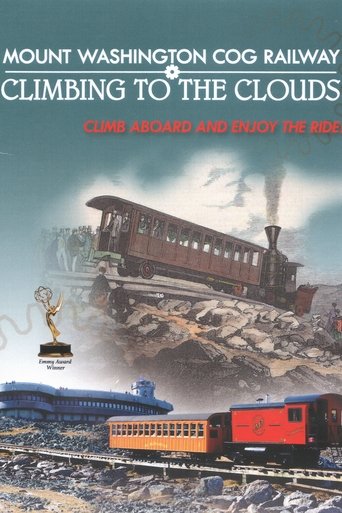
Mt. Washington Cog Railway: Climbing to the Clouds
2015
Climb aboard the historic Cog Railway for a trip up New England's highest peak on the first mountain climbing train.
More info →1/57: Experiment with Synthetic Sound (Test)
1957 · ★ 4.7
Mostly dark, rejecting images which are repeated. A stone wall, the chamber of a revolver which is, at first not recognizable, a close-up of a cactus. The duration of the takes emphasises the photographic character of the pictures, simultaneously with a crackling, brutal sound. (Hans Scheugl)
More info →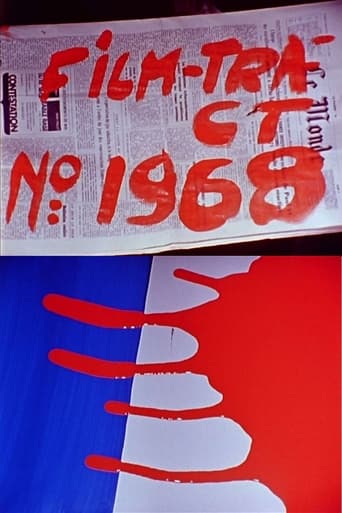
Film-Tract n° 1968
1968 · ★ 6.5
In the 1968 movement in Paris, Jean-Luc Godard made a 16mm, 3-minute long film, Film-tract No.1968, Le Rouge, in collaboration with French artist Gérard Fromanger. Starting with the shot identifying its title written in red paint on the Le Monde for 31 July 1968, the film shows the process of making Fromanger’s poster image, which is thick red paint flows over a tri-color French flag. —Hye Young Min
More info →Clouds
1969
Clouds 1969 by the British filmmaker Peter Gidal is a film comprised of ten minutes of looped footage of the sky, shot with a handheld camera using a zoom to achieve close-up images. Aside from the amorphous shapes of the clouds, the only forms to appear in the film are an aeroplane flying overhead and the side of a building, and these only as fleeting glimpses. The formless image of the sky and the repetition of the footage on a loop prevent any clear narrative development within the film. The minimal soundtrack consists of a sustained oscillating sine wave, consistently audible throughout the film without progression or climax. The work is shown as a projection and was not produced in an edition. The subject of the film can be said to be the material qualities of film itself: the grain, the light, the shadow and inconsistencies in the print.
More info →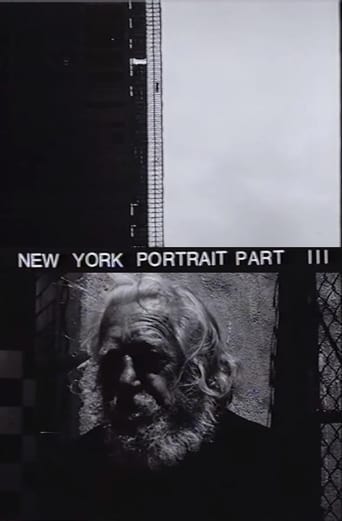
New York Portrait, Chapter III
1990 · ★ 8.3
"[Hutton’s] latest urban film, New York Portrait, Chapter III, takes on a unique tone in relation to Hutton’s ongoing exploration of rural landscape. The very fact that Hutton is dealing with older footage, with archives of memory more than immediacy, gives it a different texture than his earlier New York films. Hutton always found the presence of nature in the city, not only in his many shots of sky and vegetation, but also in the geometry and texture of the city itself, which seemed to project an independence from the human." (Tom Gunning)
More info →
The Flying Scotsman: A Rail Romance
2013 · ★ 8.5
Built in 1923, the Flying Scotsman was the first steam locomotive to run at 100 miles an hour and to star in its own feature film. This is the untold story of the iconic Flying Scotsman-the very best in the engineering of its time.
More info →Estação Metropolitana
2022 · ★ 10
Between one carriage and another, passengers tell their stories over a train journey.
More info →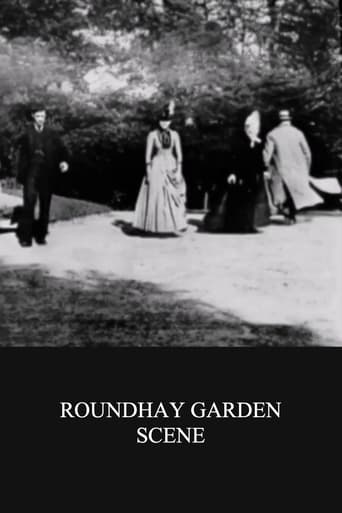
Roundhay Garden Scene
1888 · ★ 6.5
The earliest surviving motion-picture film, and believed to be one of the very first moving images ever created, was shot by Louis Aimé Augustin Le Prince using the LPCCP Type-1 MkII single-lens camera. It was taken on paper-based photographic film in the garden of Oakwood Grange, the Whitley family house in Roundhay, Leeds, West Riding of Yorkshire (UK), on 14 October 1888. The film shows Adolphe Le Prince (Le Prince’s son), Mrs. Sarah Whitley (Le Prince’s mother-in-law), Joseph Whitley, and Miss Harriet Hartley walking around in circles, laughing to themselves, and staying within the area framed by the camera. Roundhay Garden Scene is often associated with a recording speed of around 12 frames per second and runs for about 2 to 3 seconds.
More info →