Film Is. 1-6
★ 7.1 · 1998 · 59m · Documentary
Film ist. 1-6 is an avant-garde collage from Gustav Deutsch, using found footage from various scientific films to explore the properties, impact and nature of film.
More Like This
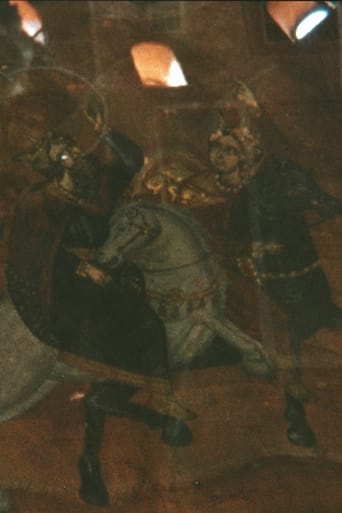
Bliss
1967 · ★ 8
The first film made by Markopoulos after moving to Europe, Bliss was shot over the course of two days using only available light to create a lyrical study of the interior of the Church of St. John on the island of Hydra.
More info →
Nothingness
2025
The Eye explores silent landscapes where nature and absence coexist. Between the memory of places and resilience in the face of time, the film oscillates between beauty and existential vertigo, capturing what persists and what fades.
More info →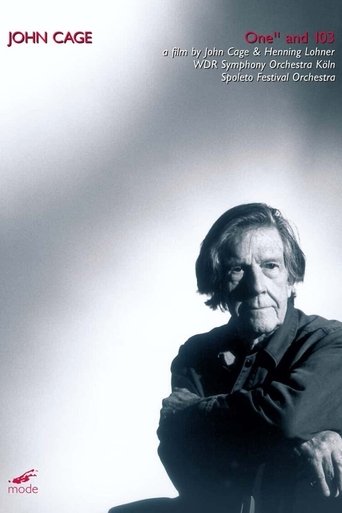
One 11 and 103
1992 · ★ 10
Avant-garde composer John Cage is famous for his experimental pieces and "chance music" but temporarily branched into video in 1992 with this art film about meaningless activity. The work is composed of two segments that are supposed to be played simultaneously: "One 11" contains the artistic statement, and "103" is a 17-part orchestral piece. Also included is a revealing documentary about Cage and director Henning Lohner.
More info →
Intersection
2025
At the Myrtle-Wyckoff intersection, transportation arteries and the community overlap and interact, connect and collide, react and respond. Where are people going? Where are they coming from? And, what lies underneath all of the activity?
More info →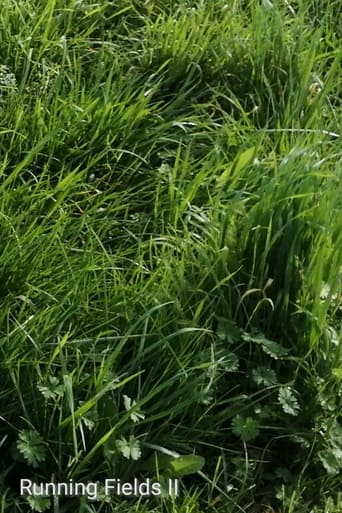
Running Fields II
2024
Fifteen images of a camera running in a park and in obscurity searching the space of light through distorsion and the sensory of rapid motion.
More info →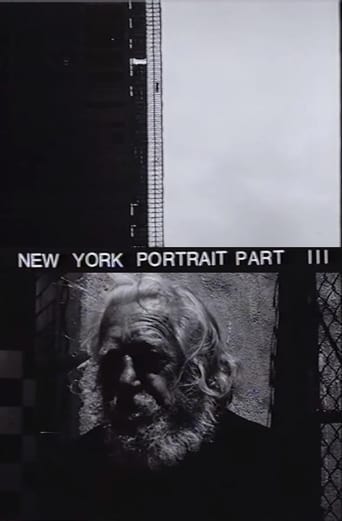
New York Portrait, Chapter III
1990 · ★ 8.3
"[Hutton’s] latest urban film, New York Portrait, Chapter III, takes on a unique tone in relation to Hutton’s ongoing exploration of rural landscape. The very fact that Hutton is dealing with older footage, with archives of memory more than immediacy, gives it a different texture than his earlier New York films. Hutton always found the presence of nature in the city, not only in his many shots of sky and vegetation, but also in the geometry and texture of the city itself, which seemed to project an independence from the human." (Tom Gunning)
More info →
Lucina Annulata
2021
Sunny. Semantic sequences guide the gaze, a gaze that is sometimes raised, propelled downwards, then too high or motionless in front of an unrecognizable and yet so familiar vision. The images, linked by echoes of chromatic palettes and linear layers, scroll to the rhythm of a voice, reminiscent of an incantation. Sacred.
More info →The Red Bank. James Joyce: His Greek Notebooks
2013
This documentary aims to register this unknown side of James Joyce: His Greek Notebooks. Trieste. Bloomsday, 2013. Dance in slow motion, accompanied by text. By deconstructing the body, we turn it into a memory: of the body, of life, of texts. The biographical references to Joyce and Mando Aravantinou, combined with the diagonal slicing of the image, cancel the realism of the landscape, including that of the Narrator’s space/study. As a culmination, Joyce’s letter “A request for a loan in Greek” functions as a timely denunciation. Various routes through cities, such as Trieste, London, New York, and Athens; languages such as Greek and English. In addition to the primal myth of Ulysses, there is another issue: Greek is “the language of the subject of Ulysses”
More info →The Trouble I've Seen
1976
A shot-on-video look at three impoverished Black communities in rural Georgia in 1976 - America's bicentennial, interspersing photos with footage and voices of those in their communities.
More info →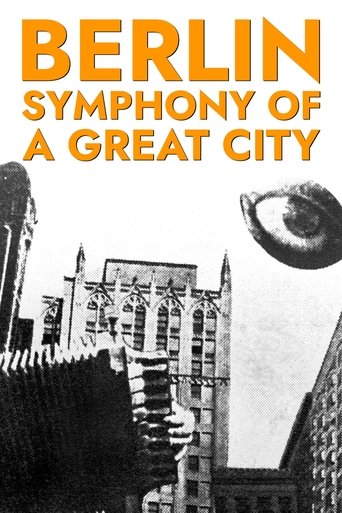
Berlin: Symphony of a Great City
1927 · ★ 7.5
A day in the city of Berlin, which experienced an industrial boom in the 1920s, and still provides an insight into the living and working conditions at that time. Germany had just recovered a little from the worst consequences of the First World War, the great economic crisis was still a few years away and Hitler was not yet an issue at the time.
More info →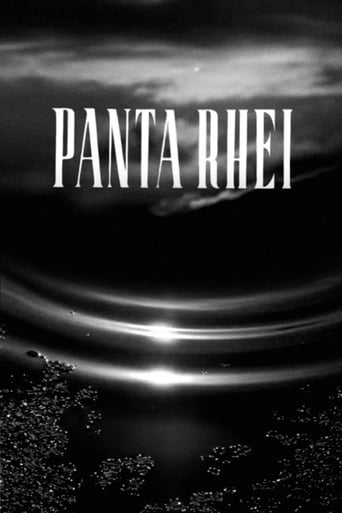
Panta Rhei
1952 · ★ 6.4
In 1952, Haanstra made Panta Rhei , another view of Holland through the eyes of a painter and filmmaker. Its poetic images of water, skies and clouds reflect Haanstra's own moods.
More info →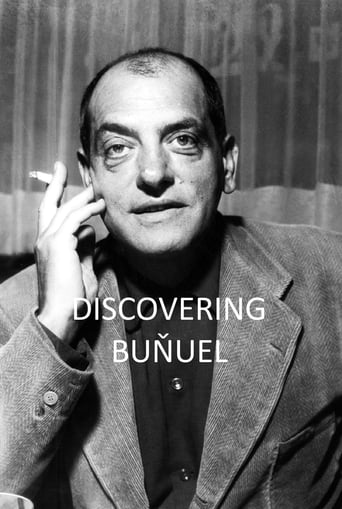
Discovering Buñuel
2012
Luis Bunuel, the father of cinematic Surrealism, made his film debut with 'Un Chien Andalou' in 1929 working closely with Salvador Dali. Considered one of the finest and controversial filmmakers with, 'L’Age d’Or' (1930), attacking the church and the middle classes. He won many awards including Best Director at Cannes for 'Los Olvidados' (1950), and the coveted Palme d’Or for 'Viridiana' (1961), which had been banned in his native Spain. His career moved to France with 'The Diary of a Chambermaid' with major stars such as Jeanne Moreau and Catherine Deneuve.
More info →