Your Chance to Live: Nuclear Disaster
1974 · 14m · Documentary
Portrays the challenges of creating a film about nuclear disaster amid public apathy. It captures behind-the-scenes moments as the crew discusses the gravity of nuclear threats, the importance of preparation, and the emotional impact of a nuclear attack. The narrative emphasizes the need for individuals to take responsibility for their safety and community in the event of an attack, blending factual information with a call to action.
More Like This
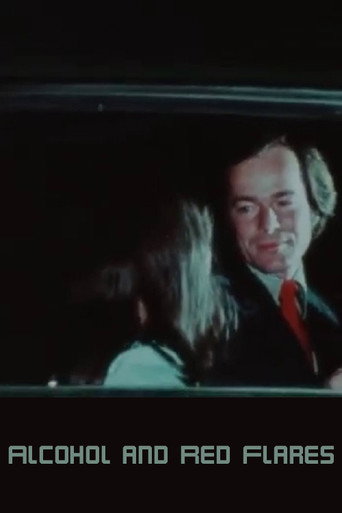
Alcohol and Red Flares
1973
This driver’s education film from the early 1970s, "Alcohol and Red Flares", warns viewers of the dangers of drunk driving. It recounts the story of a man named “Mike” who drinks heavily at a party, and insists on driving home. The consequences are steep and along the way, viewers learn about Blood Alcohol Level (also known as BAC or Blood Alcohol Content), techniques police use to verify a driver’s inebriation such as the breathalyzer, and the reasons why driving drunk is so dangerous. This film was produced by legendary social guidance filmmaker Sid Davis in cooperation with the Monterey Park Police Department.
More info →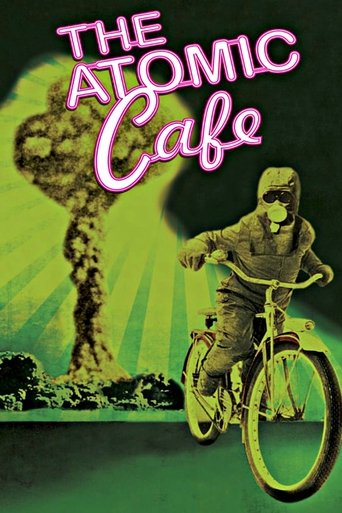
The Atomic Cafe
1982 · ★ 7.3
A disturbing collection of 1940s and 1950s United States government-issued propaganda films designed to reassure Americans that the atomic bomb was not a threat to their safety.
More info →
The Last Trapper
2004 · ★ 6.9
Norman is not just an admirer of nature, he's a part of it. He survives the harshness of the climate and the wildlife by coexisting with it. With his wife Nebraska, they live almost entirely off the land, making money by selling their furs.
More info →In Memoriam
2019
In the United States, there is an active shooter incident every 12 days. In Memoriam shows the wrenching perspective of wounded survivors, grieving relatives, and heroes of the horrific attacks at the Las Vegas Route 91 Harvest Music Festival, the Sutherland Springs Baptist Church in Texas, and the Marjory Stoneman Douglas High School in Parkland, Florida.
More info →
Flow: For Love of Water
2008 · ★ 6.6
From both local and global perspectives, this documentary examines the harsh realities behind the mounting water crisis. Learn how politics, pollution and human rights are intertwined in this important issue that affects every being on Earth. With water drying up around the world and the future of human lives at stake, the film urges a call to arms before more of our most precious natural resource evaporates.
More info →
I'm So Sorry
2021 · ★ 8
In a quiet forest, a sign warns of radiation hazard. “Is this the past or the future?” muses the masked figure who appears like a kind of ghost in nuclear disaster areas. At a time when nuclear power may be re-emerging as an alternative to fossil fuels, this calmly observed and compelling tour takes us to places that may serve as a warning.
More info →
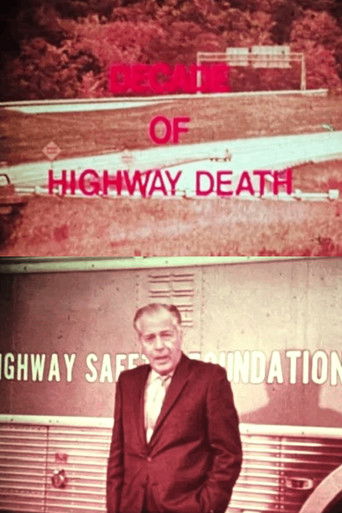
Decade of Death
1971
This highway scare film produced by the Highway Safety Foundation in 1971, "Decade of Death", is a retrospective of the organization's 10 years of gory, shocking social guidance films which aimed to promote traffic safety and driver responsibility through the display of bloody and horrific footage of traffic crashes.The Highway Safety Foundation made driver scare films such as "Signal 30," "Mechanized Death," and "Highways of Agony" that intended to encourage drivers to drive responsibly and with consideration of the risks and consequences. It was the organization's belief that crash footage, while horrific, was the best way to convey the importance of driving safely.
More info →
76 Days Adrift
2025
Steven Callahan gives a gripping first-hand account of his NYT bestselling novel "Adrift: 76 Days Lost At Sea." On the eve of February 4, 1982, in the middle of the night there was a loud boom as a whale collided with Steven's boat. Within minutes, his small craft was flooded with a rush of water. He grabbed what he could, heaved his life raft into the ocean, and snatched his emergency kit. Without food or water, for an incredible 76 days the inflatable raft was his home as he drifted across the entire Atlantic Ocean. Forced to come to terms with his own shortcomings and limitations, Steven finds a strength he never knew he had. This official documentary, executive produced by Callahan, brings the story to life with found 8MM footage, original stills of the time of the voyage, and first-person recreation. Still possessing many of the original artifacts, he takes us step-by-step through his harrowing and life-altering adventure.
More info →Planning for Public Shelter Entry
1963
The film features a meeting led by Dave Taylor, the shelter manager, discussing the protocols and responsibilities for staff members involved in managing a public shelter. Key participants, including operations deputy Harvey Johnson and health leader Mrs. Carter, outline their roles in ensuring a smooth entry for occupants during an emergency. The meeting emphasizes the importance of organization, communication, and the distribution of supplies. Staff members are encouraged to familiarize themselves with each other's duties and prepare for potential scenarios, including managing newcomers and ensuring safety and sanitation within the shelter.
More info →Public Shelter Organization and Staff
1963
Created in 1963 at the height of the Cold War, this Civil Defense training film uses a dramatic premise to show how emergency staff should manage and organize a large public fallout shelter during a crisis. A Shelter Manager is shown immediately taking control of the situation in the shelter, speaking calmly to those who have made it into the facility, closing the door promptly once the shelter is full, and sticking to the "shelter plan" as the situation unfolds. Some of the areas discussed in this nuclear war drama are the safety plan, regular inspections, supervised public entry into shelters, ventilation, first aid, sanitation, fire prevention, decontamination of personnel, and more. "Shelter living is different," the Manager states, "But we have a trained staff that will make your stay in this shelter livable for us all."
More info →Planning For Emergence From Public Shelters
1963
A training film for public shelter managers explaining when people should be allowed to leave the shelter after a disaster.
More info →