Five Film Exercises: Film 5
1944 · 7m · Animation
Opens with a short canonical statement of a theme upon which the entire film is constructed. The canon is repeated in contrasting variations by means of color. A second section poses the same image in deep film space. The image unfolds itself repeatedly, leaving the receding image to continue on smaller and smaller. Preserved by the Academy Film Archive in 2005.
More Like This
An American March
1941 · ★ 6
Stars and stripes forever and ever and ever. Preserved by the Academy Film Archive in 2000.
More info →
Eye Myth
1967 · ★ 5.5
After the title, a white screen gives way to a series of frames suggestive of abstract art, usually with one or two colors dominating and rapid change in the images. Two figures emerge from this jungle of color: the first, a shirtless man, appears twice, coming into focus, then disappearing behind the bursts and patterns of color, then reappearing; the second figure appears later, in the right foreground. This figure suggests someone older, someone of substance. The myth? Preserved by the Academy Film Archive in 2012.
More info →Why
1987
The story of a starving third-world infant, set to a song by Harry Chapin. Preserved by the Academy Film Archive in 2015.
More info →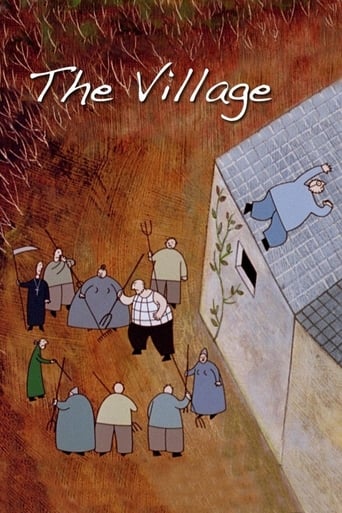
The Village
1993 · ★ 7.6
A village is ruled by the church, but is filled with hypocritical sinners who constantly spy on each other.
More info →Study No. 13
1933
Experimental short film by Oskar Fischinger. Preserved by the Academy Film Archive in 2000.
More info →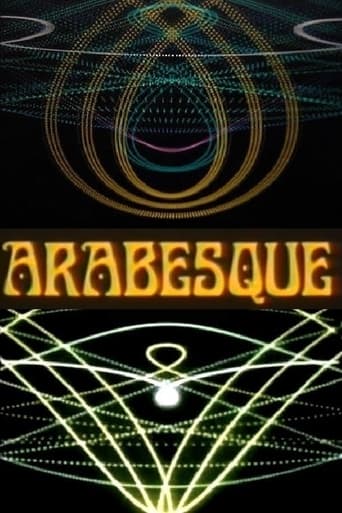
Arabesque
1975 · ★ 7.6
John Whitney's pioneering work of computer animation, Arabesque, from 1975. This flowing, abstract short film is a wonder to behold, a work of art. Like many other computer graphics pioneers, this film suggests roots in psychedelics and spiritual quests as much as engineering and mathematics. Preserved by the Academy Film Archive in 2007.
More info →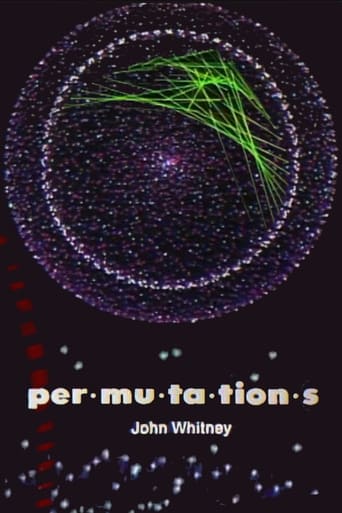
Permutations
1968 · ★ 6
An experimental short film by John Whitney Sr. which combines animated shapes and colors; Computer graphics as dynamic, swirling art. Preserved by the Academy Film Archive in 2014.
More info →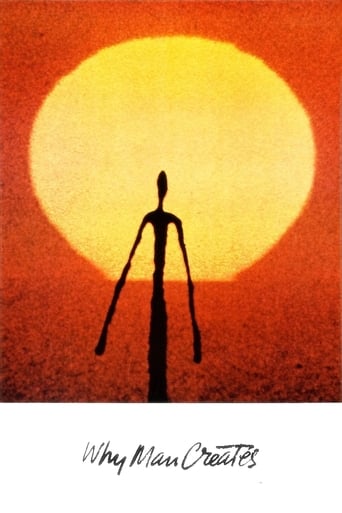
Why Man Creates
1968 · ★ 6.7
A 1968 animation/documentary that criticises the industrial system.
More info →The Shoemaker and the Hatter
1950
The cartoon is one of the Marshall Plan's most popular films. A clash between a shoemaker and a hat maker illustrates the contrasts between protectionism and free trade. Preserved by the Academy Film Archive in 2003.
More info →
Eclipse Predictions
1982
Diana Wilson’s mysteriously beautiful animated tableaux fluidly unfold before our eyes, a generous receptacle for the mournful, harrowing soundtrack, in which the filmmaker recounts a tragedy from her youth. Preserved by the Academy Film Archive in 2011.
More info →The Room
1959
"A destitute room, transmuted by the startling magic of stop-motion photography into a luxuriant explosion of color. A new work by D’Avino (THE BIG O)." – Cinema 16 program notes, May 1959. Preserved by the Academy Film Archive in 2007.
More info →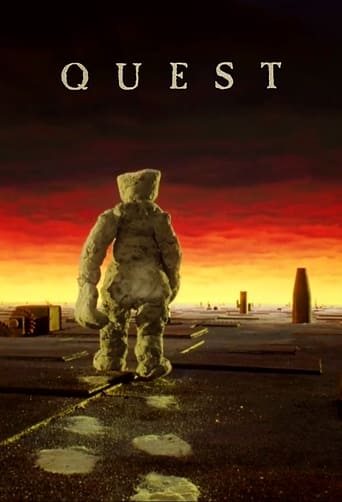
Quest
1997 · ★ 6.8
A being made of sand wakes up in the desert. It finds a bottle near him, but it's empty. The noise of dropping water can be heard not far away.
More info →