
Vivaldi Le Quattro Stagioni
2008 · 42m · Music
In April 1981 violinist Gidon Kremer performed Vivaldi's Four Seasons leading the English Chamber Orchestra recorded in the baroque library of the monastery in Polling, near Munich. It is, as one would expect from a master violinist, a superbly insightful performance. The sound is resonant and satisfying although surely not true 5.1, and those who wish to have this music on video might well investigate it.
More Like This
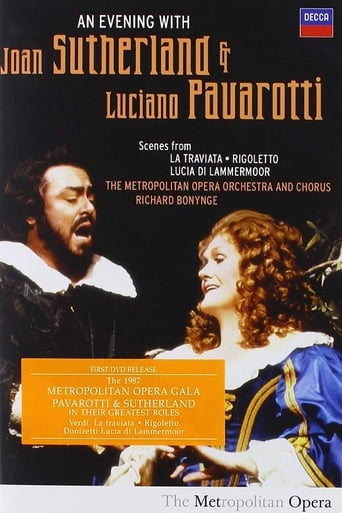
An Evening with Joan Sutherland and Luciano Pavarotti
1988 · ★ 8
Opera greats Luciano Pavarotti and Joan Sutherland -- one of the most acclaimed tenors and one of the most beloved sopranos of the 20th century -- take the stage at the Met for a gala evening of opera scenes with special guest Leo Nucci. Filmed in 1987, the memorable program includes scenes from the first and third acts of Donizetti's "Lucia di Lammermoor," the third act of Verdi's "La Traviata" and the third act of Verdi's "Rigoletto."
More info →
Igor Stravinsky's 'The Firebird' by The Royal Philharmonic Orchestra
2022
On Air presents Igor Stravinsky's The Firebird, performed by the world-renowned Royal Philharmonic Orchestra, conducted by Peter Breiner, and recorded at BBC Television Centre. Expertly brought to life by some of the world's most sought-after classical musicians, The Firebird comprises 74 musicians: 51 string, 11 brass, 8 woodwind and 4 percussion. Available now to watch on demand in cinematic quality.
More info →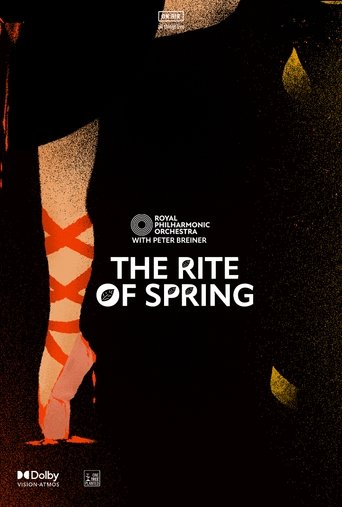
Igor Stravinsky's The Rite of Spring performed by The Royal Philharmonic Orchestra
2022
On Air presents Igor Stravinsky's The Rite of Spring, performed by the world-renowned Royal Philharmonic Orchestra, conducted by Peter Breiner, and recorded at BBC Television Centre. Expertly brought to life by some of the world's most sought-after classical musicians, the ensemble comprises 93 instruments: 51 string, 16 woodwind, 20 brass and 6 percussion. The full performance is available to watch on demand in cinematic quality.
More info →
Igor Stravinsky's 'Petrushka' by The Royal Philharmonic Orchestra
2022
On Air presents Igor Stravinsky's Petrushka, performed by the world-renowned Royal Philharmonic Orchestra, conducted by Peter Breiner, and recorded at BBC Television Centre. Expertly brought to life by some of the world's most sought-after classical musicians, the ensemble comprises 86 instruments: 51 string, 14 woodwind, 16 brass, 4 percussion and 1 piano. Available now to watch on demand in cinematic quality.
More info →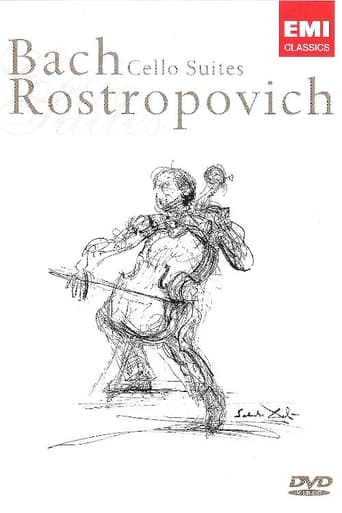
Mstislav Rostropovich - Bach Cello Suites
2004
This is one of the most important recordings of the 20th century, both for its content (considered by many the greatest cello music of all time) and for the intense devotion, careful preparation, and towering technical skill that went into the project. It was a brilliant idea to make a video as well as an audio recording. Cellists will welcome the chance to study Rostropovich's bowing and fingering techniques, close up and at leisure. And music-lovers will welcome the visuals of the recording location, a French church whose architecture, statues, and flickering candles complement the music.
More info →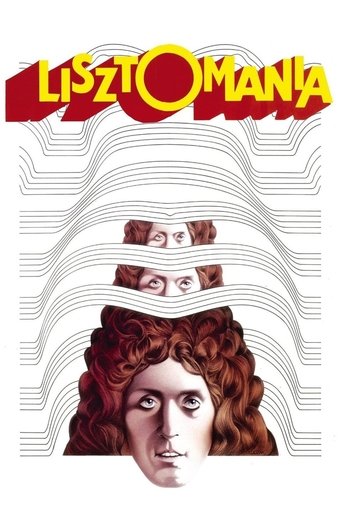
Lisztomania
1975 · ★ 6
In the 19th century, Romantic composer/pianist Franz Liszt tries to end his hedonistic ways but keeps getting sucked back in by his seductive fellow composer Richard Wagner.
More info →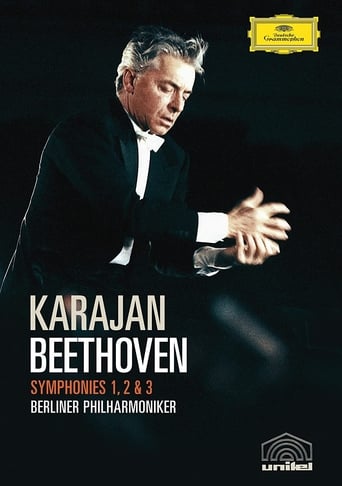
Karajan: Beethoven - Symphonies 1, 2 & 3
2005
This set was recorded in the late 1960s to early 1970s. Herbert von Karajan is widely acknowledged to be one of the finest conductors of the 20th century, and around 1970 he was at his peak.
More info →
Pierre et le loup : Avec Jean Reno et Renaud Capuçon
2025
For Peter and the Wolf, premiered in 1936, Prokofiev chose the form of a symphonic tale, featuring a narrator alongside the orchestra. A unique work in which each instrument embodies a character. Renaud Capuçon conducts the Orchestre de Chambre de Lausanne, while Jean Reno takes on the role of narrator.
More info →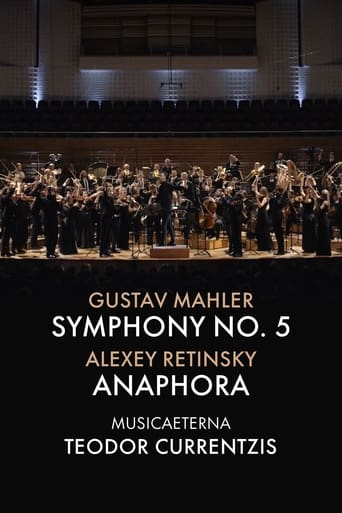
Mahler: Symphony No. 5
2021 · ★ 10
For Mahler, symphonies always were a means of interpreting the most convoluted philosophical problems that couldn’t be resolved verbally. The ambitious structure of the five-part Fifth Symphony spans from the Funeral March to the roaring finale. It is a forthright attempt to resolve the tragic conflict with the surrounding world. The brilliant fourth part of the symphony, Adagietto, resembles a beautifully mysterious flower that every conductor reimagines in their own style. As one of the twentieth century’s most influential maestros, Mahler redefined the conductor’s role. For him, the conductor is just as integral to his own musical works as they are to the composer. When a maestro steps onto the podium and opens the score, he recreates musical universes from scratch. Teodor Currentzis and the musicAeterna orchestra have performed Mahler’s symphonies around the world for many years. The Fifth Symphony has earned its place as one of the highlights of the cycle.
More info →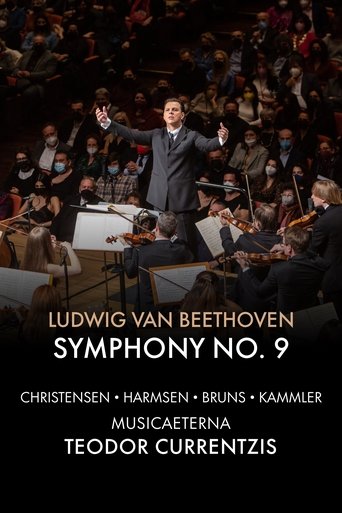
Currentzis conducts Beethoven Symphony No. 9
2022 · ★ 10
Ludwig van Beethoven headed for Symphony No. 9 literally his entire life. As early as the 1790s, he had an eye on Ode to Joy, perhaps the most well-known poem by Friedrich Schiller, written on the threshold of the French Revolution (1786). In his mature and, in particular, later years, the deaf composer with an acute ‘hearing vision’ increasingly distanced himself from conventional forms and genres and wrote parts beyond the possibilities of instruments of his day. He nurtured the idea of a symphony with a choir for at least several years. The history of the Ninth’s interpretations includes 200 years of staggering revelations and lingering stagnation. Performed by the musicAeterna orchestra, choir, and guest soloists under the baton of Teodor Currentzis, Beethoven’s opus magnum acquires the original poignancy and energy of a recent discovery.
More info →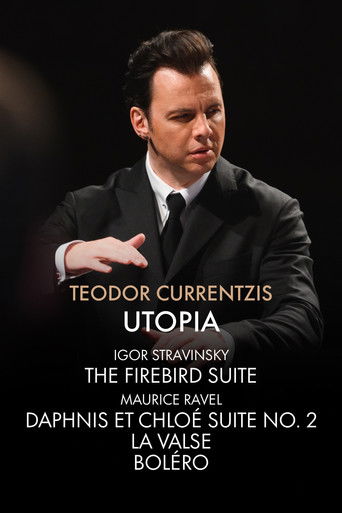
Teodor Currentzis: Utopia
2022 · ★ 10
Utopia, the new orchestra of conductor Teodor Currentzis, can be experienced for the first time in Vienna on its inaugural tour with the 1945 version of Igor Stravinsky’s ‘The Firebird’ and Maurice Ravel’s Suite No. 2 of ‘Daphnis et Chloé’, ‘La Valse’ and ‘Boléro’.
More info →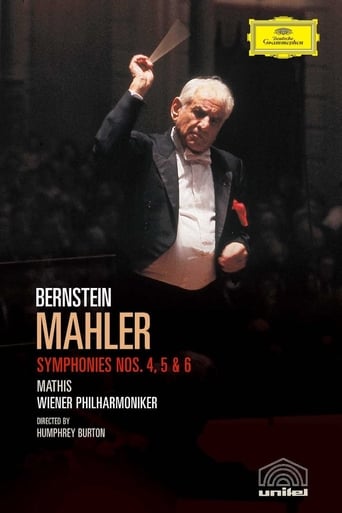
Mahler - Symphonies Nos. 4, 5 & 6
1976 · ★ 10
For Mahlerites, his symphonies are much more than musical performances--they can be an emotional or spiritual journey through the struggles, fears, and triumphs of life. This Sixth Symphony is a 1976 performance in the Vienna Musikvereinssaal with PCM stereo and DTS 5.1. The 2 dvd set also includes the 4th and 5th symphonies, which are performed as magnificently as the Sixth.
More info →