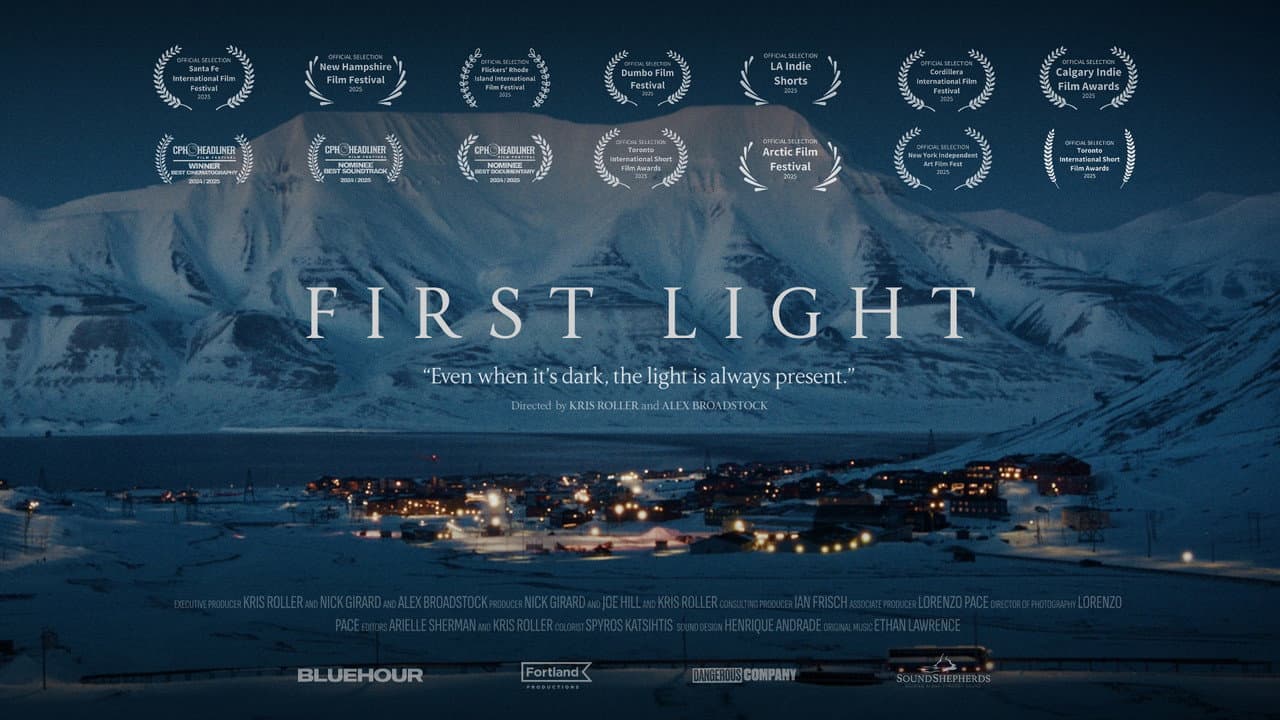
First Light
32m · Documentary
Residents of the world’s northernmost town, which is steeped in darkness four months per year, grapple with why they inhabit such a hostile place—and how their unique relationship to the sun changes the meaning of light and darkness within their own lives.
More Like This
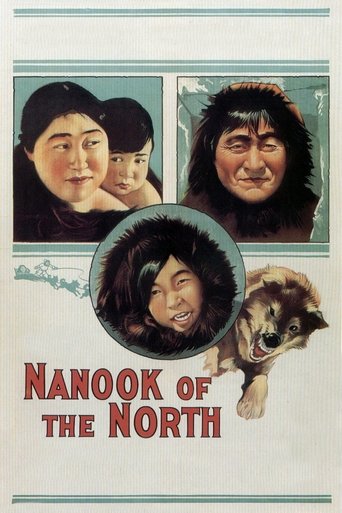
Nanook of the North
1922 · ★ 7.1
This pioneering documentary film depicts the lives of the indigenous Inuit people of Canada's northern Quebec region. Although the production contains some fictional elements, it vividly shows how its resourceful subjects survive in such a harsh climate, revealing how they construct their igloo homes and find food by hunting and fishing. The film also captures the beautiful, if unforgiving, frozen landscape of the Great White North, far removed from conventional civilization.
More info →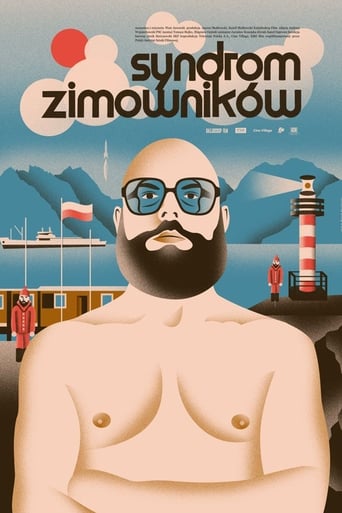
The Antarctic Syndrome
2019 · ★ 6.5
Does doctor Jan Terelak belong to an “elitist” group of the most unethical experimenters? The Polish scientist tested boundaries of human mental resilience in extreme conditions of solitude in Antarctica. The starting point for Piotr Jaworski's documentary is the psychologist's journal. The project from forty years ago was focused on studying the mental condition of polar explorers at the Polish station. Men were in the situation of confinement, comparable to a space mission. The film reconstructs these events, referring to the then contemporary context and changes in the perception of science.
More info →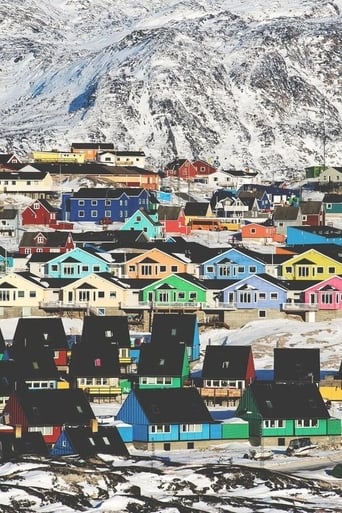
Nya vädrets offer
2009
"Melting Lives - Victims of the New Weather" is a six-part documentary series in which the viewers meet people in the Arctic region who live close to and depend on nature for survival, and who struggle to maintain their way of life. Their tales are being heard and testimonies about how life is changing as the world gets ever warmer. The host, Samuel Idivuoma, is from northern Sweden. He visits Inuits on Greenland and in Alaska, aboriginal people in Canada and Nenets from the Siberian tundra in Russia
More info →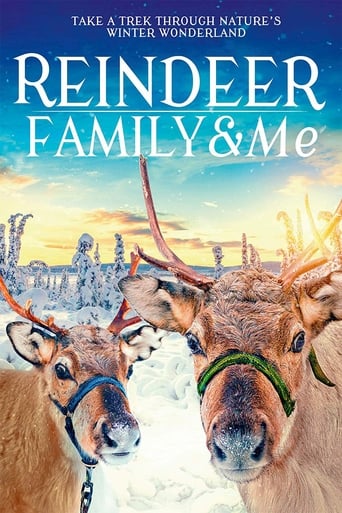
Reindeer Family & Me
2017
Wildlife cameraman Gordon Buchanan travels to the frozen north, deep inside the Arctic Circle, to meet the ancient Sami people and the animals they hold so close - reindeer.
More info →
Into the Land of Ice and Fire
2022
Two parallel stories are gradually unfolding the everyday life of two very different persons - that of 86-year-old Sara and 7-year-old Mihka - both residing in Guovdageaidnu - Kautokeino, in the middle of the Norwegian arctic tundra, through the drastic change of the arctic seasons and the passage from the long winter’s darkness to the never-ending light of the summer season.
More info →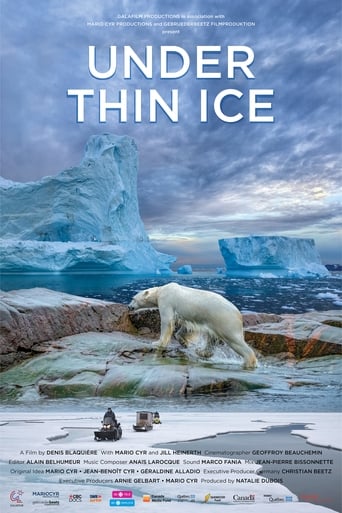
Under Thin Ice
2019
Two Canadian experts in underwater filming, Mario Cyr and Jill Heinerth, join forces for the first time to record how Arctic wildlife is adapting to the dramatic effects of climate change.
More info →
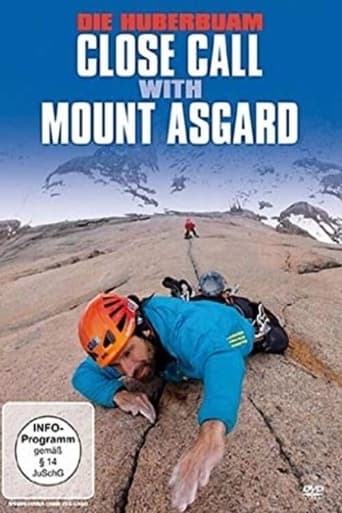
Die Huberbuam - Close Call with Mount Asgard
2014 · ★ 4.2
The climbing brothers Thomas and Alexander Huber (Germany) attempt to conquer free the infamous "Bavarian Direttissima" (upper tenth degree of difficulty) on the iconic Mt. Asgard on the Arctic Baffin Island (Canada). A 40 days expedition with polar bears, frostbite and climbing at the peril of their lifes.
More info →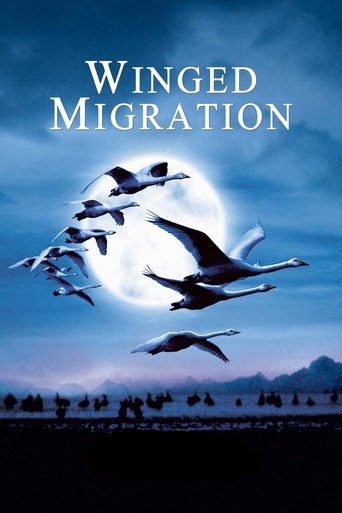
Winged Migration
2001 · ★ 7.6
This documentary follows various migratory bird species on their long journeys from their summer homes to the equator and back, covering thousands of miles and navigating by the stars. These arduous treks are crucial for survival, seeking hospitable climates and food sources. Birds face numerous challenges, including crossing oceans and evading predators, illness, and injury. Although migrations are undertaken as a community, birds disperse into family units once they reach their destinations, and every continent is affected by these migrations, hosting migratory bird species at least part of the year.
More info →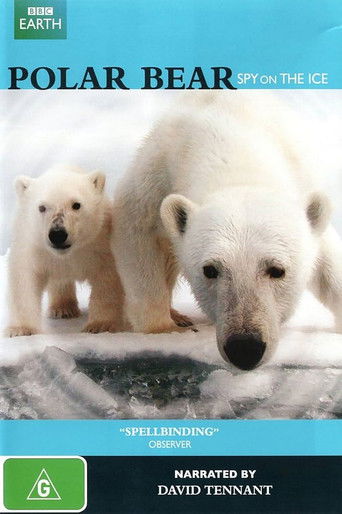
Polar Bear: Spy on the Ice
2011 · ★ 7.5
Shot mainly using spy cameras, this film gets closer than ever before to the world's greatest land predator. As the film captures its intimate portrait of polar bears' lives, it reveals how their intelligence and curiosity help them cope in a world of shrinking ice.
More info →
Camp Century: The Hidden City Beneath the Ice
2020 · ★ 7.5
How in 1959, during the heat of the Cold War, the government of the United States decided to create a secret military base located in the far north of Greenland: Camp Century, almost a real town with roads and houses, a nuclear plant to provide power and silos to house missiles aimed at the Soviet Union.
More info →
Adrift
2004
"Adrift" is shot on the arctic island of Spitzbergen and in Norway. It combines time-lapse photography with stop-motion animation of the landscape. Through camera-angles and framing the film gradually dislocates the viewer from a stable base where one loses the sense of scale and grounding.
More info →